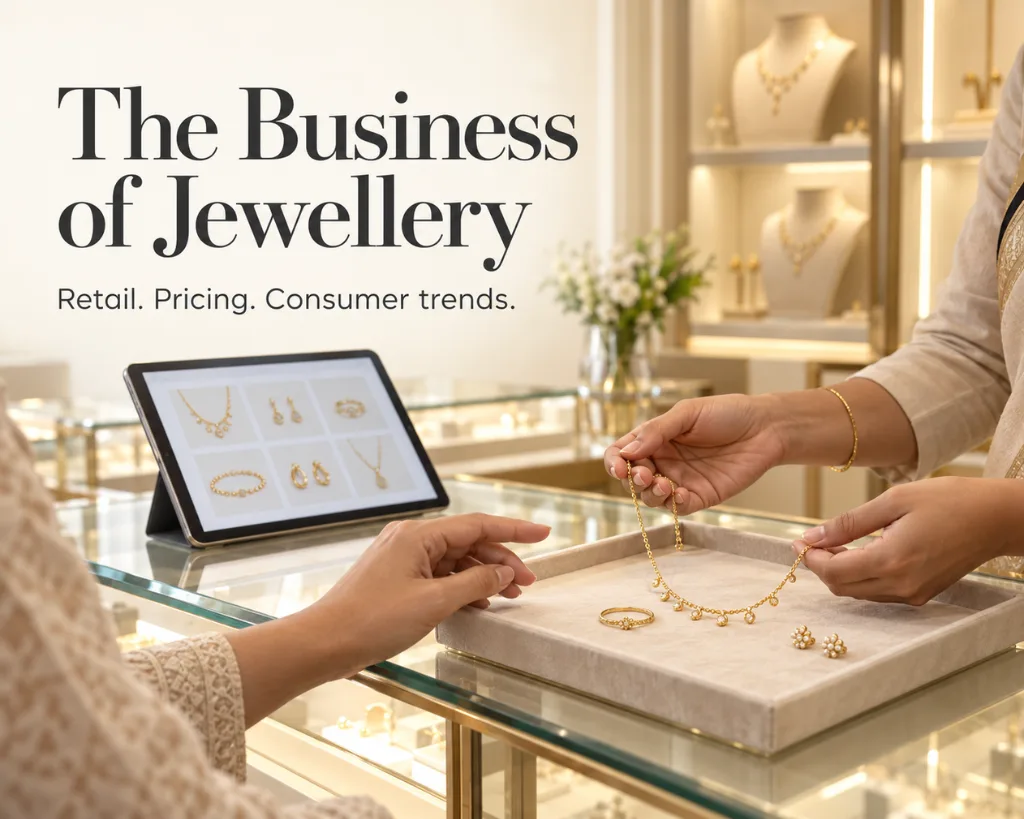



Most advice on how to start a jewellery business in India is about brand. Find your aesthetic, know your customer, tell your story. All true, and all covered: we have written about it in the business of jewellery: what it takes to build a brand. This piece is about the other half, the half that actually sinks new labels, which is compliance, costing, cash and karigars.
Nine things graduates consistently learn the expensive way.
1. Registration and GST come before the first sale, not after
Pick a structure, whether proprietorship, LLP or private limited, and register it. Get a PAN and a GST registration, since jewellery falls under HSN Chapter 71. Rates have been stable for some time at 3 per cent on gold jewellery and 5 per cent on job work and making charges, but rates and thresholds change, so confirm the current position with a chartered accountant rather than with a blog. Selling without GST registration while chasing marketplace listings is the commonest early mistake, because no marketplace will onboard you without it.
2. You cannot sell hallmarked gold without a BIS licence
The jewellery business licence BIS issues to jewellers is a registration on the BIS portal, and it is what allows you to sell hallmarked gold in notified districts. Without it your pieces cannot be hallmarked in your name, and unhallmarked gold jewellery cannot legally be retailed. Registration is inexpensive and mostly paperwork. The practical work is building a relationship with an assaying and hallmarking centre and understanding what each piece will come back stamped with. Those marks are explained in BIS hallmarking and the six-digit HUID.
3. Learn to cost properly, then add your margin on top
A jewellery price is built, not chosen. The components are metal weight multiplied by the day’s rate for that karat, stone cost, a making or labour charge quoted either per gram or as a percentage, a wastage or loss allowance, plating, certification and packaging, and then GST.
Two lines cause most of the damage. Wastage is real, since metal is genuinely lost in filing, polishing and casting, but it is also where inflated numbers hide, and a brand that does not track its actual loss is either overcharging customers or quietly funding someone else. And karigar quotes rarely include rejections. Price for the pieces that fail QC, because some will.
4. Your karigar relationship is your production line
You will not manufacture in-house at the start. You will work with karigars, and the terms are unfamiliar to anyone who has only studied design: gold issued on weight against a return, metal exchange, loss accounted per job, payment against delivery. Get the weight accounting right from day one, in writing. These relationships run on trust built slowly and destroyed instantly, and a designer who understands the bench earns it faster. That is one practical argument for having filed a casting yourself, as described in inside the bench.
5. Inventory is where your money goes and stays
This is the difference between jewellery and almost every other design business. Stock is not a cost of goods sold. It is capital sitting in a safe. Ten designs across three sizes and two metals is sixty pieces before you have sold anything. Launch narrow, with one tight collection and few SKUs or variants, and expand from what actually sells. Made-to-order takes longer and converts less, but it is how most labels survive year one.
6. Photography is not a nice-to-have
Jewellery is the hardest product category to photograph and the one most dependent on it. It is small, reflective and detail-dependent. Budget for a proper macro setup, or for a photographer who shoots jewellery specifically, because a generalist will not get it right. Every channel judges you on the first image, and inconsistent product photography reads as an inconsistent brand.
7. Choose a channel deliberately
The options to sell jewellery online India offers have different economics, not just different reach. Your own site gives you margin and customer data but no traffic until you buy it. Marketplaces bring volume and take commission that can reach a fifth of the price, with returns on your account. Instagram sells well through direct messages and converts poorly to a cart. Exhibitions and pop-ups produce cash quickly and cost heavily in stall fees and travel. Stockists and multi-brand stores reach the right buyer and pay late. Pick two, learn them properly, and ignore the rest for a year.
8. Write your returns and buyback policy before you need it
Customers will ask what happens if they exchange a piece, what your buyback rate is, and whether making charges are refundable. Decide these in advance, publish them, and hold to them. Gold buyers expect the same clarity from a small label as from a large chain, and improvising an answer under pressure costs more than a generous written policy ever will.
9. Protect the designs, and know what protection means
Register your business name as a trade mark, and register signature pieces under the Designs Act for their visual appearance. Be realistic, though: copying here is rapid and enforcement slow. The durable protection is a recognisable design language and a customer who knows your work on sight.
Where this gets taught
Very little of the above is intuitive, and none of it is design. It is why the Post Graduate Diploma in Jewellery Management exists. It is a one-year programme covering merchandising, product development, costing, retail and management for people who already hold a degree, and it is the most direct route for anyone intending to run their own label rather than join a studio.
Costing and merchandising also run through the degree programmes, the B.A. in Gems & Jewellery Design at Mumbai and the B.Des in Jewellery Design at Jaipur and Delhi, and through the jewellery merchandising certificate. IIGJ encourages entrepreneurs in this industry, and a good number of graduates from across its institutes now run their own labels. Placements has the picture, the institutes page shows which programmes run where, and admissions can point you to the right intake.