
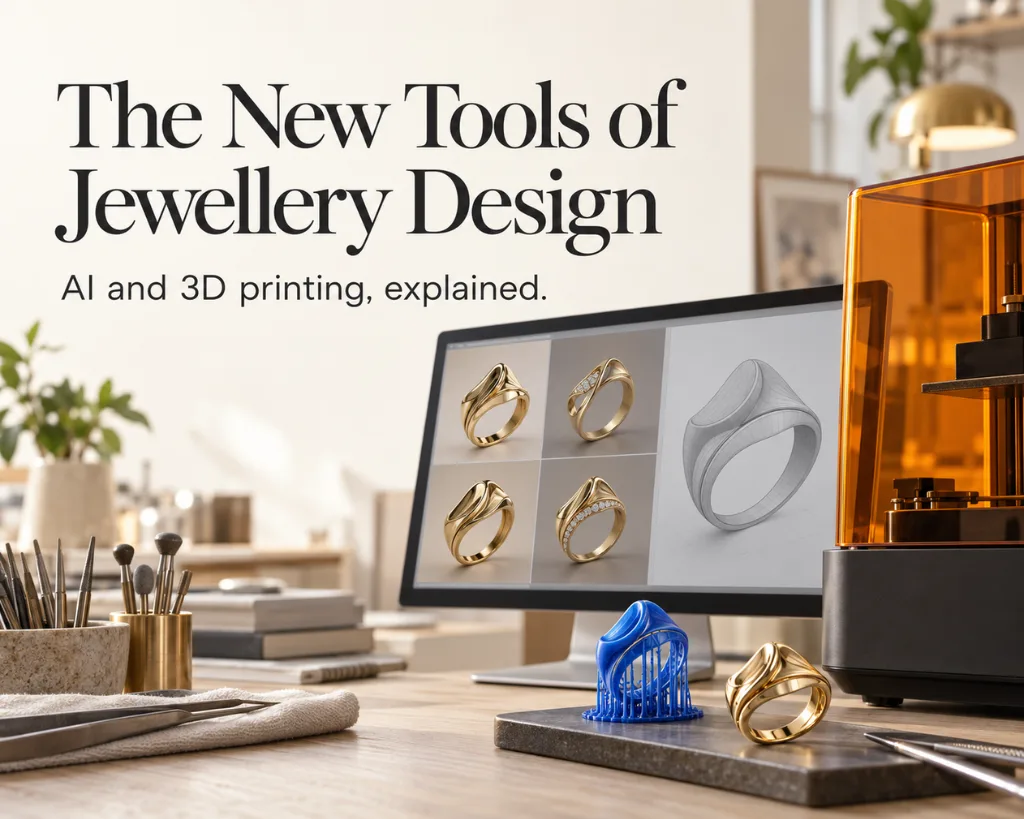
Jewellery design has always balanced imagination with technique. A sketch, a gemstone, a metal setting, a motif and a maker’s hand all come together to create something meaningful. Today, that process is being shaped by a new set of tools.
AI and 3D printing are changing how jewellery ideas are explored, refined, tested and produced. Before a single gram of gold is melted, many design decisions now begin on a screen, through CAD, AI-assisted design, digital modelling and rapid prototyping.
This shift matters especially in India, where gems and jewellery remain one of the country’s most significant industries. According to IBEF data citing GJEPC, the Indian gem and jewellery market was valued at USD 85 billion and is projected to reach USD 130 billion by 2030.
For students considering a career in jewellery design, this means one thing clearly: technology is no longer separate from the craft. It is becoming part of how modern jewellery is imagined, developed and brought to life.
AI Tools: Designing Smarter, Not Just Faster
AI in jewellery design is not about replacing creative judgement. It is about helping designers work more intelligently, especially during research, ideation and variation development.
Trend-forecasting tools, for example, study purchase patterns, social media behaviour and retail movement to understand which styles, motifs, colours and forms may become popular in the coming months. This helps designers create collections that are not only beautiful but also relevant to the market they are designing for.
Generative design tools can also create multiple design directions from a single brief. A student or designer working on a ring, pendant, bracelet or bridal concept can explore different structures, patterns, proportions and settings far more quickly. The final decision still depends on the designer’s eye, understanding of wearability, material knowledge and sense of aesthetics.
This is where AI earns its place. It gives designers more options to study, compare and refine, but it does not replace the human ability to understand the emotion, culture, craftsmanship and purpose behind a piece of jewellery. At IIGJ Jaipur, AI-powered design is taught alongside manual sketching and CAD in the PG Diploma in Jewellery Design, Technology and Management.
3D Printing: From Screen to Studio
3D printing has become one of the most important links between digital design and physical jewellery making. Once a design is created in CAD software such as Rhino or Matrix, it can be converted into a physical model through 3D printing. This allows designers, manufacturers and clients to see the form, size, proportion and detailing of a piece before it is cast in metal.
Stereolithography, commonly known as SLA, is one of the 3D printing methods used in jewellery. In simple terms, SLA uses light to build highly detailed resin or wax-like models layer by layer. These models then go into the lost-wax casting process, which has been used in fine jewellery manufacturing for generations.
Modern technology, in other words, is not replacing traditional jewellery-making methods. It is making the process faster, more accurate and easier to refine. A design that might need several manual trials can now be tested, corrected and approved with far greater precision before it reaches production.
Prototyping accounted for 43.4% of the global 3D printed jewellery market in 2024, according to Data Bridge Market Research. That figure shows how deeply 3D printing has entered the jewellery workflow, especially for testing and refining designs before manufacturing.
Where Traditional Craft and Modern Technology Meet
The future of jewellery design does not belong only to technology, and it does not belong only to traditional craft. It belongs to professionals who understand both.
A jewellery designer today needs to think creatively, sketch ideas, understand gemstones, study forms, work with metals and respect the techniques that have shaped the industry for generations. They must also be comfortable with CAD, digital rendering, AI-assisted ideation and 3D printing. The strongest designers can move from a design screen to a workbench without losing the essence of the piece.
This combination is especially important in India, where jewellery carries cultural, emotional and ceremonial value. Technology improves speed and precision, but the meaning behind a mangalsutra, a bridal set, an heirloom, a temple jewellery piece or a contemporary luxury design still needs human understanding.
How IIGJ Prepares Students for This Shift
At IIGJ, students learn jewellery design as a balance of creativity, craftsmanship, technical knowledge and industry readiness. AI-assisted design, CAD, 3D printing, gemmology, jewellery manufacturing and traditional goldsmithing are treated as connected parts of the same learning journey.
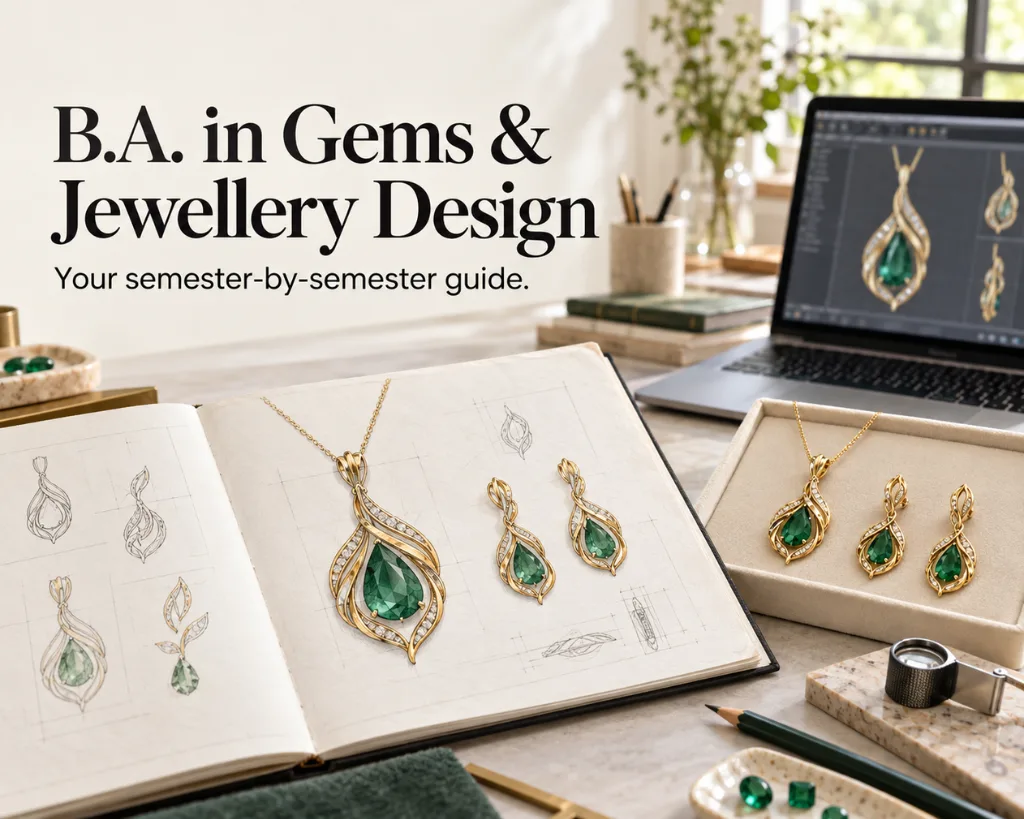
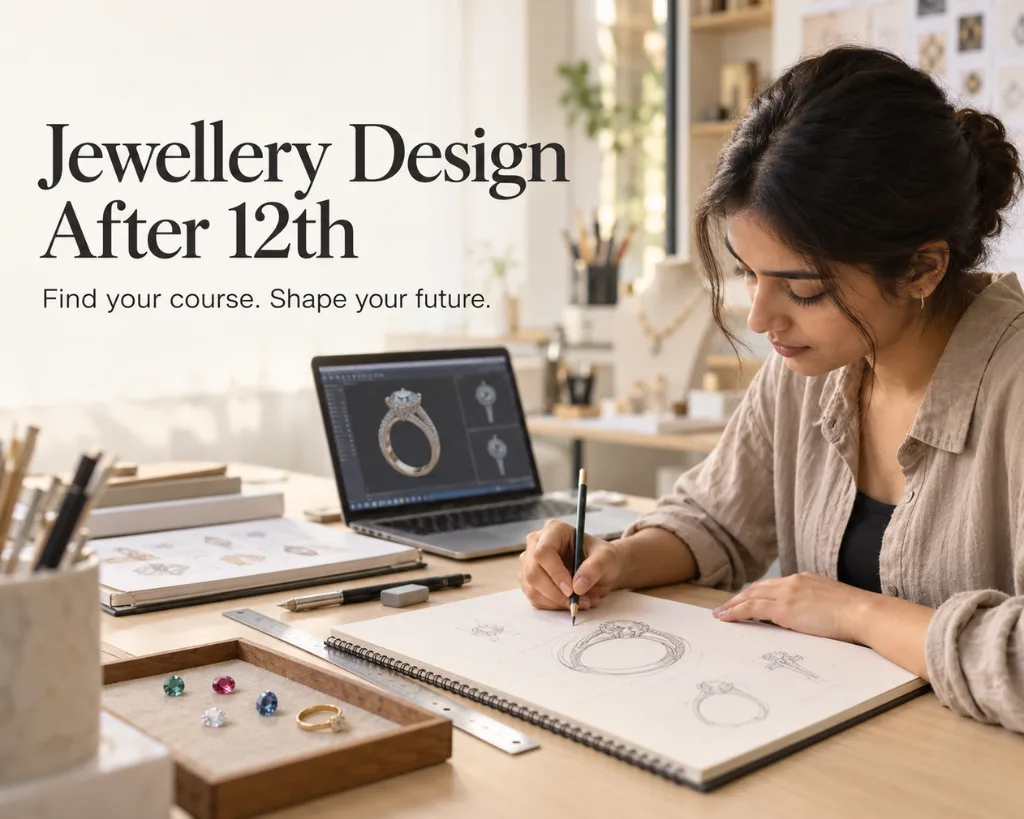
That journey can begin at different points. The B.A. in Gems & Jewellery Design and the B.Des in Jewellery Design cover the full spectrum, from hand rendering to CAD and production. The Diploma in Computer Aided Design takes students deep into Rhino and Matrix, while the Diploma in Jewellery Manufacturing builds skill at the bench, in casting and in finishing. For those adding a single capability, the professional certificate in CAD Rhinoceros for Jewellery is a focused place to start.
This approach builds the confidence to work across every stage of jewellery creation, from concept development and design visualisation to prototyping and production. As the industry evolves, students who understand both craft and technology will be well prepared for careers in design studios, manufacturing units, jewellery brands, CAD departments, export houses and their own ventures. Placements show where IIGJ graduates have gone, and why the jewellery industry is a brilliant career choice that sets out the bigger picture.
Technology is transforming jewellery design, but the designer remains central. The tools may be changing, but the need for imagination, skill, cultural understanding and craftsmanship is stronger than ever. If you are deciding where to begin, see every jewellery design course after 12th, or speak to admissions about the current intake.