


Wedding Season 2026: Jewellery Trends That Will Define the Year
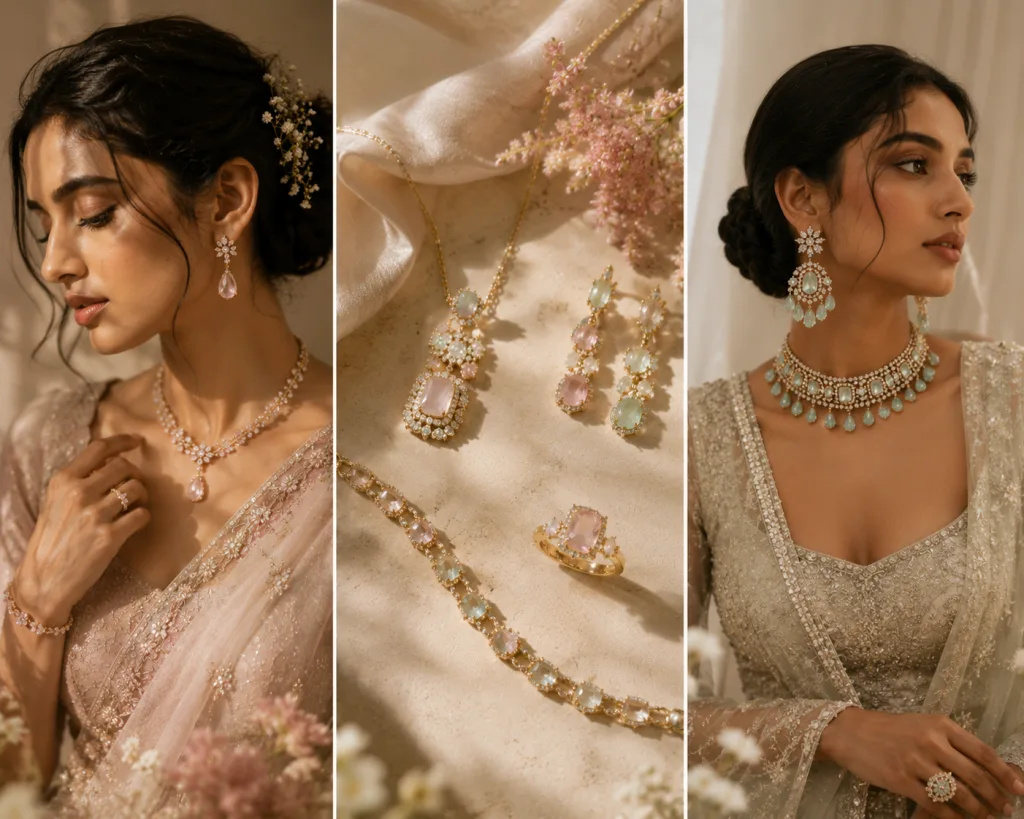
The 2026 wedding season is expected to reflect a clear shift in how jewellery is approached. It is no longer driven solely by scale or tradition, but by thoughtful styling, versatility and long-term usability. Jewellery is being chosen not just for the occasion, but for how it performs across multiple moments. At the centre of this shift is a design-first approach, where pieces are both visually impactful and practically wearable. Statement jewellery is being reimaginedChokers paired with layered necklaces, particularly in Polki and Kundan, are expected to remain dominant. However, the emphasis will be on achieving a sense of grandeur without excessive weight. Brides are increasingly prioritising jewellery that photographs well, remains comfortable through extended ceremonies and delivers a strong visual presence. Jadau and antique finishes are also set to see renewed relevance, especially for traditional ceremonies, but with more refined and balanced styling. A shift toward lightweight designHeavy jewellery is not disappearing, but its role is evolving. Brides, bridesmaids and guests are likely to prefer lighter, re-wearable pieces that extend beyond the wedding. Detachable elements, stackable designs and adaptable jewellery will become more prominent. This reflects a broader move toward practical luxury, where comfort and repeat usability are key considerations. Softer colour palettesAs bridal fashion continues to incorporate pastel tones and softer palettes, jewellery will follow a similar direction. Gemstones such as aquamarine, rose quartz and subtle emerald combinations are expected to complement traditional gold tones. The overall aesthetic is moving toward a more refined and balanced look. The evolving mangalsutraThe mangalsutra is being reinterpreted as a piece of everyday jewellery. Sleeker chains, minimal pendants and understated detailing are expected to define its evolution, making it more adaptable to contemporary lifestyles while retaining its symbolic value. Groom jewellery gains importanceGroom jewellery is becoming a considered part of wedding styling. Structured Kanthi malas, brooches, decorative button sets and minimal bracelets are emerging as key elements. The focus remains on balance and proportion, ensuring that jewellery complements the sherwani rather than overpowering it. This shift reflects a growing awareness of complete and cohesive styling for grooms. Styling as a strategic choiceAnother defining trend is the move from purchasing single heavy sets to curating jewellery across different functions. Brides are expected to select distinct pieces for mehendi, sangeet, wedding and reception, creating coordinated looks rather than relying on one set throughout. Final TakeWedding jewellery in 2026 is set to reflect a more considered consumer mindset. The emphasis is on combining design, comfort and long-term value. Jewellery is no longer limited to occasion wear but is increasingly seen as part of a broader, wearable collection. This evolution highlights how the industry is aligning more closely with modern lifestyles while maintaining its connection to tradition.
IIGJ and IIT Madras Partner to Advance Lab Grown Diamond Education in India
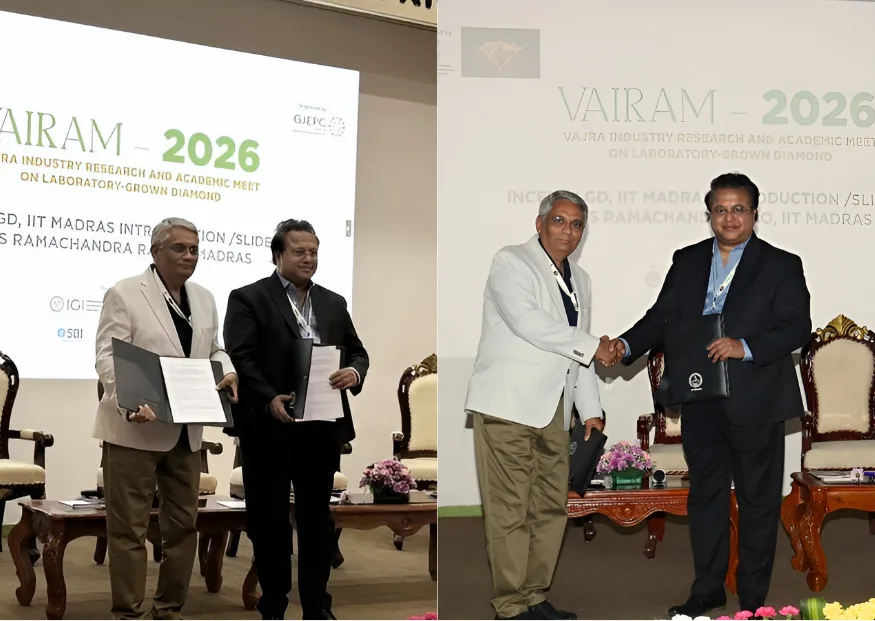
India’s gems and jewellery industry is entering a new phase of innovation with the Indian Institute of Gems & Jewellery (IIGJ) partnering with the India Centre for Lab Grown Diamond (InCent-LGD), IIT Madras. Formalised through a Letter of Intent at VAIRAM 2026, this collaboration marks a significant step toward structured lab grown diamond (LGD) education in India. The Letter of Intent, signed by Mr. Debasish Biswas, CEO of IIGJ, and Prof. M. S. Ramachandra Rao, Head of InCent-LGD, IIT Madras, brings together industry-led jewellery education and advanced scientific research. The objective is clear: to build a strong talent pipeline equipped with expertise in lab grown diamond technology, jewellery manufacturing, and materials science. Bridging Industry and Academia in LGD Technology As part of this initiative, IIGJ and IIT Madras will introduce certification and diploma programmes in lab grown diamond technology. These programmes are designed to combine practical jewellery training with research-driven academic knowledge, offering a comprehensive understanding of LGD production, grading, applications, and innovation. This integrated approach ensures that students and professionals gain both technical expertise and hands-on industry exposure, making them industry-ready for the rapidly growing lab grown diamond sector in India. Meeting the Demand of a Growing LGD Market The global lab grown diamond market is expanding at a rapid pace, driven by technological advancements, evolving consumer preferences, and increasing demand for sustainable jewellery. India, already a global leader in diamond cutting and polishing, is now strengthening its position in LGD manufacturing and innovation. This collaboration directly addresses the need for skilled professionals trained in modern diamond technologies. By aligning education with industry requirements, IIGJ and IIT Madras are supporting the long-term growth of the Indian gems and jewellery industry. Strengthening Jewellery Education in India For the Indian Institute of Gems & Jewellery, this partnership reinforces its commitment to future-focused education as IIGJ continues to evolve its curriculum to include emerging areas like lab grown diamonds and sustainable practices. At the same time, IIT Madras, through InCent-LGD, contributes cutting-edge research in diamond growth technologies and advanced materials. Together, the two institutions create a powerful ecosystem for innovation, skill development and knowledge exchange. A Step Toward Future-Ready Talent This partnership reflects a broader shift toward industry-academia collaboration in the jewellery sector, where education is closely aligned with real-world industry needs. Such initiatives not only enhance India’s global competitiveness but also open up new career opportunities in lab grown diamonds, jewellery technology, and sustainable luxury. As the LGD segment continues to grow, the demand for trained professionals will only increase. Structured programmes like these will play a key role in shaping the next generation of jewellery professionals and diamond technologists. Shaping the Future of Lab Grown Diamond Education With this collaboration announced at VAIRAM 2026, lab grown diamond education in India is becoming more structured, research-driven, and industry-aligned. It signals a strong move toward building capabilities that match global standards. For those looking to build a career in the evolving lab grown diamond and jewellery industry, the right education is essential. Explore specialised programmes at the Indian Institute of Gems & Jewellery (IIGJ) and take the first step toward a future in this fast-growing sector.
How Gen Z Is Shaping the Future of Jewellery

Jewellery has become one of the strongest forms of identity for Gen Z, a generation that values self-expression, purpose and personal meaning in every choice they make. Earrings, especially, have evolved into a style signature rather than an accessory. Their preferences are reshaping the jewellery market, influencing designers, brands and even jewellery education. This shift is also reflected in the kind of learning young talent seeks today at IIGJ emphasising design thinking, sustainability, materials understanding and trend interpretation that match the evolving landscape. Gen Z’s approach to jewellery goes beyond fashion. It blends comfort, creativity, values and technology. Here’s a sharper look at what’s shaping their choices. 1. Minimalist Style, Maximum Versatility Gen Z gravitates toward clean, simple silhouettes that pair with everything. Think sleek bangles, minimal rings, soft chains, and lightweight everyday pieces. These accessories fit into a lifestyle that values comfort and consistency, without losing aesthetic intent. 2. Statement Pieces: Sculptural and Playfully Bold When they want impact, Gen Z chooses sculptural shapes, asymmetric designs and exaggerated forms. These earrings and bracelets elevate basics instantly and reflect a preference for individuality over trend-following. 3. Sustainable Jewellery: Style with Purpose Recycled metals, lab grown diamonds and ethically sourced stones resonate strongly with this generation. Sustainability is no longer a niche preference, it is a key buying consideration. 4. Chains and Neck Pieces Take Center Stage Chunky Cuban links, slim box chains, layered neck stacks, pendants with personal symbols is becoming one of Gen Z’s strongest fashion languages. Today, everyone uses chains to define their aesthetic, whether bold, soft or experimental. 5. Layering Culture: Personal Stories in Stacks Layered necklaces, stacked rings, mixed-metal bracelets and curated ear stacks are now everyday styling. Layering lets Gen Z build a look that evolves with mood and moment, making accessories feel personal instead of prescriptive. 6. Mixed Metals: Blending Tones and Textures Gold with silver, silver with platinum. Gen Z is comfortable mixing metals to create layered, textured looks that feel modern and expressive. 7. Vintage Revival: Old-School With a Twist Retro hoops, 90s-inspired shapes and Y2K silhouettes are returning with contemporary finishes. Nostalgia remains a powerful design influence. 8. Customised Jewellery: Personal Stories Made Wearable Initials, nameplates, birthstones and personalised motifs hold strong emotional value. Gen Z gravitates toward jewellery that feels like an extension of their identity. Where This All Leads Gen Z’s choices are reshaping how accessories are designed, produced and marketed. Their focus on authenticity, innovation and values is influencing brands, manufacturing practices and even how the industry approaches design thinking and craftsmanship. Jewellery today is no longer just about form. It reflects cultural shifts, personal identity and changing expectations around sustainability and expression.
Why the Jewellery Industry Is a Brilliant Career Choice
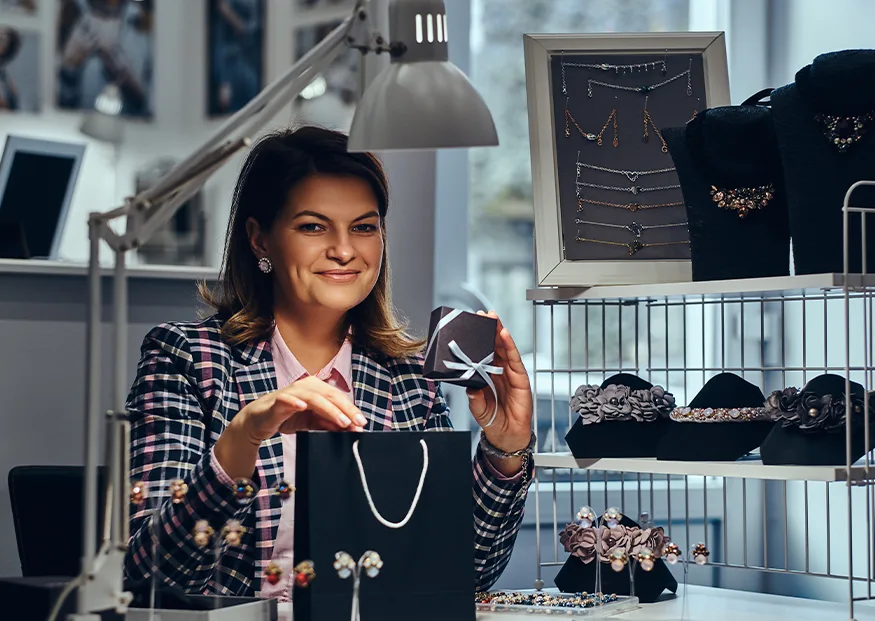
The global jewellery market continues to grow steadily, driven by rising demand for unique, meaningful and high-value pieces. For creative professionals, the industry offers a rare opportunity to combine artistic skill with business potential. As consumer preferences shift toward personalised design, ethical sourcing and innovative craftsmanship, the jewellery sector has become one of the most promising spaces for young talent. This blend of creativity and commerce has opened the door to new career paths that go beyond traditional design roles. Whether you are drawn to gemstones, digital tools, merchandising or brand building, the industry offers a wide spectrum of opportunities that reward both imagination and skill and IIGJ as an institution plays a key role in preparing the next generation of professionals to thrive in this evolving landscape. A Market Full of Opportunities The global jewellery market continues to grow steadily and is projected to reach USD 480-500 billion by 2030, while India remains one of the world’s strongest jewellery economies with a market valued at USD 85-90 billion. Demand is increasingly driven by distinctive, story-led pieces, with rising interest in coloured gemstones such as turquoise and opals. Consumers today value rarity, craftsmanship and cultural relevance, giving designers and creators greater freedom to innovate beyond traditional formats. At the same time, digital retail has removed entry barriers for independent designers and small brands, enabling global reach without physical stores. Another key shift is the rapid growth of men’s and gender-neutral jewellery, including chains, bracelets and statement pieces, reflecting changing fashion norms and Gen Z’s comfort with self-expression. Together, these trends have expanded career possibilities across design, gemmology, manufacturing and merchandising, making the jewellery industry one of the most opportunity-rich creative sectors today. Understanding Today’s Jewellery Landscape The jewellery industry is evolving in three major directions. – First, sustainability is becoming a defining factor in buying decisions. Consumers want to know where materials come from and whether they are responsibly sourced. – Second, personalisation is more important than ever. Custom-made jewellery, handmade pieces and one-of-a-kind gemstone selections are in high demand. – Third, blended retail is reshaping the market. Traditional stores remain influential, but online platforms now play a major role in product discovery and purchase. Together, these factors create an ecosystem where creativity, craftsmanship and market knowledge work together to shape successful careers. How Creativity Drives Value Jewellery sits at the intersection of design and commerce. Designers need to create pieces that are aesthetically pleasing while also understanding their commercial potential. Online marketplaces have made it easier for artisans to showcase their work. Visibility is no longer restricted to local buyers. Global audiences can now discover new styles, techniques and interpretations through digital platforms. For creative professionals, this means a wider reach, a stronger brand presence and direct access to customers who value originality. Skills That Are Building Strong Careers As the industry becomes more specialised, structured education is playing a crucial role in preparing professionals for real-world challenges. Training programs in gemmology, CAD design, diamond grading, merchandising and manufacturing help students understand both the technical and artistic sides of the industry. Strong foundational learning allows creative individuals to move confidently into roles such as jewellery designers, merchandisers, gemmologists, entrepreneurs, CAD specialists or retail professionals. With the right guidance and exposure, students can build careers that are not only creatively fulfilling but also financially rewarding. A Growing Space for Creative Talent The jewellery industry continues to expand with new technologies, evolving customer expectations and a global marketplace that values originality. For creative professionals, it is a space where ideas become tangible products. As global markets open up and new categories emerge, from coloured gemstones to gender-neutral jewellery, the scope for innovation continues to grow. Success in this space increasingly belongs to those who combine creative vision with technical skill, industry awareness and an understanding of how jewellery is designed, produced and experienced today.
Cartier’s Love Unlimited Bracelet: Evolution of a Timeless Icon
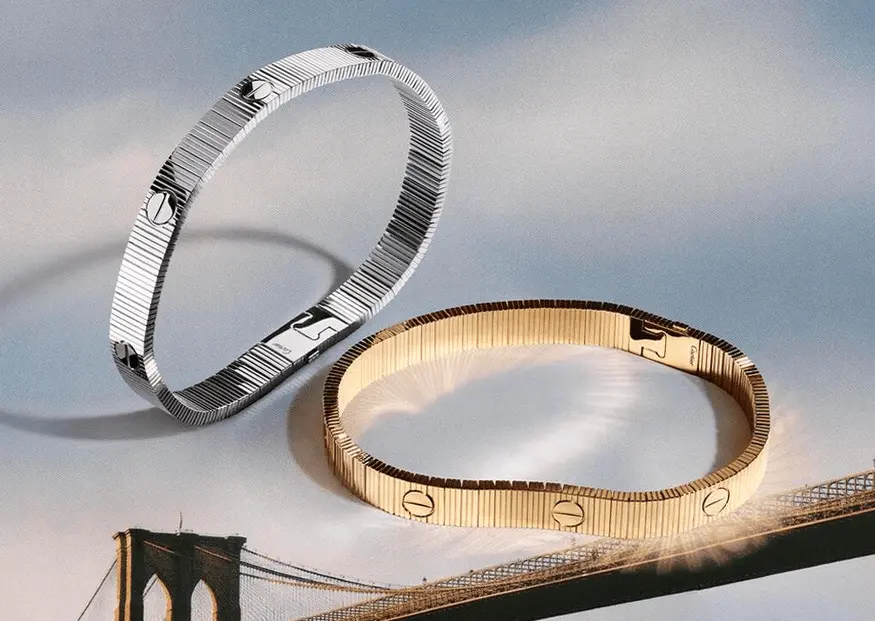
Love Redefined for a New Era Love, like design, is never static. It evolves with time growing bolder, more personal and deeply expressive. For over a century, Cartier has reflected these by creating designs that transcend trends to become symbols of timeless emotion. The maison’s latest creation, the Love Unlimited bracelet, reinterprets one of its most iconic designs from 1969 for a new generation that views love as fluid, independent, and boundless. The original Cartier Love bracelet was a revolution in jewellery design. Its screw-locked form symbolized permanence, a modern take on eternal devotion. It wasn’t just a piece of jewellery; it was a philosophy. Now, 56 years later, Cartier has reimagined this classic to mirror how love itself has changed in today’s world which is no longer defined by convention, but celebrated for its individuality and openness. A Legacy Reinvented The Love Unlimited collection carries forward the DNA of the original design while introducing movement, flexibility, and freedom. Built with over 200 precision-engineered components, the bracelet embraces innovation without losing the spirit of heritage. Its flexible structure adapts effortlessly to the wrist, making it feel almost alive and capable of bending, curving and flowing like emotion itself. This new design allows for endless personalization. The bracelet can be stacked, linked with others or even styled as a statement bag charm, a gesture that resonates with the versatility of modern relationships. Where love was once defined by permanence alone, today it is understood through connection, growth, and shared journeys. Cartier translates this shift seamlessly into form, merging sentiment with technical brilliance. Craftsmanship in Motion Every Cartier creation is a balance of engineering and emotion, and the Love Unlimited bracelet exemplifies this harmony. The maison spent years perfecting the bracelet’s fluidity, developing over 100 prototypes before achieving the ideal curvature and movement. Its patent-pending invisible clasp ensures a seamless fit, enhancing both comfort and sophistication. This design precision isn’t just mechanical, it’s poetic. The way the bracelet hugs the wrist evokes intimacy, its movement echoing the rhythm of the wearer’s life. Available in White, Rose and Yellow Gold with a matching ring, the collection is a celebration of enduring affection and individuality. It reflects the kind of love that values both unity and independence, the two forces that define modern relationships. Love That Moves With Time The Love Unlimited bracelet is more than an accessory; it’s a story told through design. It represents how emotion and craftsmanship progress together. In the late 20th century, love was expressed through permanence – a locked bracelet, a shared vow. Today, it’s about self-discovery, equality, and emotional authenticity. Cartier’s reinvention captures this transformation beautifully: love that flows, adapts, and grows without losing its essence. Through its precision and poetry, the Love Unlimited bracelet reminds us that meaningful design responds to culture, emotion and time. For students and enthusiasts who study jewellery through the lens of craft, engineering and storytelling, pieces like this offer valuable insight into how icons are reimagined for new generations. At IIGJ, we continue to highlight such global design milestones to inspire young designers and deepen their appreciation for the art and mechanics of fine jewellery.
2025 Groom Jewellery Trends: Bold, Versatile and Unapologetically Stylish
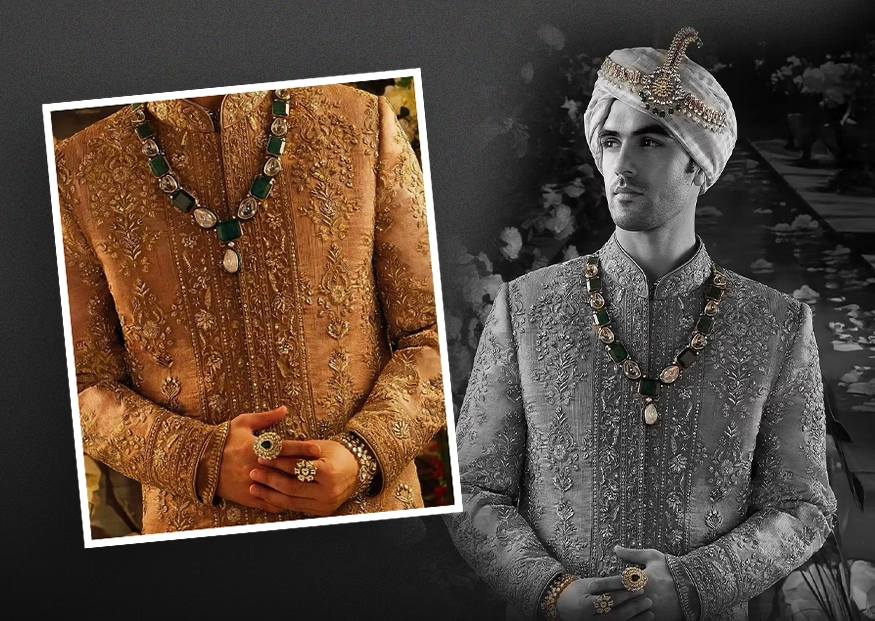
In 2025, men’s wedding fashion is entering a new chapter that celebrates individuality, craftsmanship, and self-expression through jewellery. No longer limited to a simple chain or ring, today’s groom views jewellery as an essential part of his identity and personal style. From beaded layers to sculpted cufflinks, the modern groom’s jewellery choices are thoughtful, elegant, and deeply meaningful. Beyond the Sherwani: Layered Beads and Chains One of the biggest men’s jewellery trends of 2025 is layering. Grooms are now exploring the charm of multi-layered gemstone beads, pearls and gold chains that add dimension and depth to their look. These pieces are not just for the wedding day; they transition effortlessly to festive gatherings and formal occasions, bringing versatility and refinement to every outfit. Designers are reinterpreting traditional Indian accessories like kantha malas and navratna beads into sleeker, more modular forms. Each layer tells a story of heritage meeting modernity, reflecting the groom’s evolution in style and sensibility. Modern Heirlooms that Move with Your Style Heirloom-inspired jewellery is making a strong comeback in contemporary fashion. Grooms are choosing pendants, royal brooches, and kalgi pins that combine old-world craftsmanship with modern innovation. Whether set in gold, silver, or platinum, these pieces often feature gemstones, enamel detailing, and handcrafted motifs that blend tradition with creativity. These modern heirlooms are not meant to be worn once and forgotten. They can be restyled across occasions, from festive celebrations to formal gatherings, keeping their legacy alive through evolving fashion choices. Statement Rings and Signature Cufflinks Nothing defines refined masculinity better than a statement ring. The 2025 groom is embracing bold and sculptural designs that feature textured finishes, gemstones, and unique metalwork. Each ring tells its own story of strength and individuality. Cufflinks, once seen as purely functional, have now evolved into collectible accessories. With enamel detailing, gemstone accents, and monogram engravings, they bring personality to every look. Small yet impactful, these designs reflect confidence and attention to detail, perfect for grooms who prefer understated luxury. Bracelets and Kada Revival Beaded bracelets and minimal kadas are experiencing a strong revival in men’s jewellery. Crafted in mixed materials like gold, silver, leather, and semi-precious stones, they represent the modern man’s balance between spirituality and style. The kada, a symbol of tradition and protection, has transformed into a piece of contemporary sophistication. It’s now worn as a statement accessory that connects generations while fitting effortlessly into modern wardrobes. Rethink, Repurpose, Restyle Perhaps the most defining shift in men’s jewellery is adaptability. The new-age groom no longer reserves his jewellery for weddings alone. Instead, he invests in pieces that can be restyled for everyday wear, reflecting a mindset of sustainability and conscious luxury.Jewellery today goes beyond appearance. It embodies emotion, heritage and self-expression. Whether it’s a handcrafted ring passed down through generations or a layered chain chosen for the big day, each design carries a personal story. And there’s more than sentiment behind this trend, the men’s jewellery market is growing fast. The global men’s jewellery segment was valued at around USD 48.6 billion in 2024 and is projected to grow at nearly 10% annually through 2034. With that kind of momentum, it’s no surprise designers and brands are expanding beyond the usual rings and chains into bracelets, cufflinks, brooches and mixed-metal statements. The message is clear: jewellery for him is not niche anymore, it’s now a personal style tool. Source: Polaris
Big Rocks, Bigger Statements: The rise of oversized engagement rings
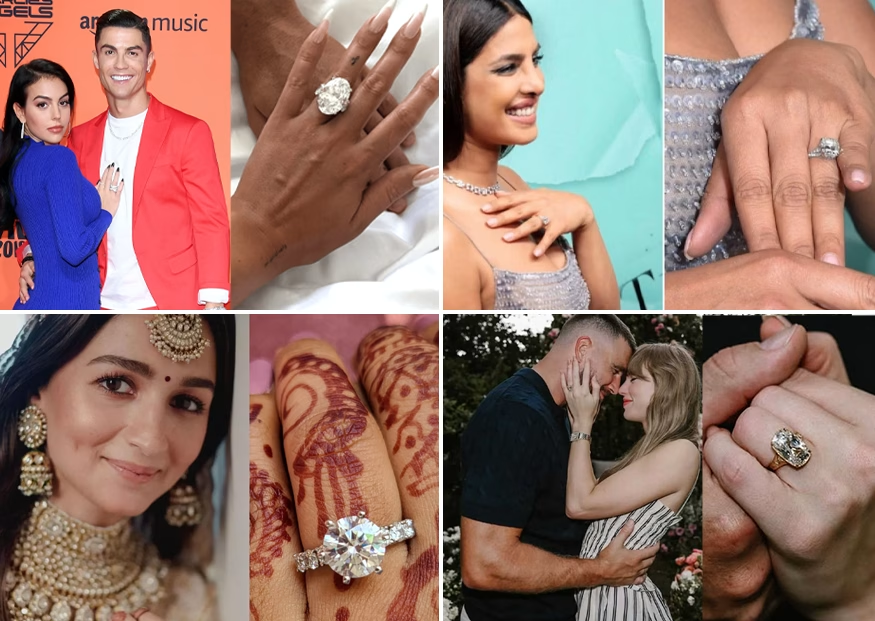
In the world of contemporary bridal jewellery, oversized engagement rings are making a striking return and not as mere accessories, but as bold declarations of individuality, emotion and artistry. These statement pieces have transformed from traditional tokens of love into expressions of personality and power.
How to Choose the Right Jewellery Course?
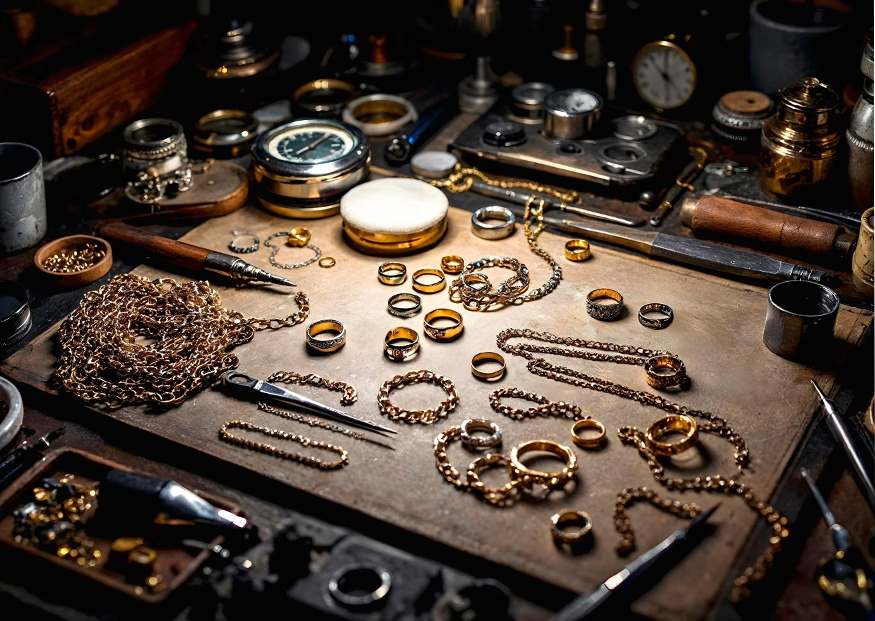
In today’s fast-evolving design landscape, jewellery is more than just an accessory- it’s a statement of identity, culture, craftsmanship, and commerce. As India continues to cement its global leadership in the gems and jewellery industry, the need for skilled professionals has never been greater. But for many aspiring talents, the first big question is: How does one choose the right jewellery course? Begin by identifying your interests. Are you someone who enjoys sketching and creative expression? Or are you drawn to the technical side of things like manufacturing and gemstone identification? Perhaps you’re business-minded and dream of launching your own jewellery brand. Knowing where your passion lies—be it design, CAD, gemmology, manufacturing, or retail—will help you narrow down the right area of study. IIGJ offers a variety of programs suited for different stages in your academic or professional journey. If you’re fresh out of school and looking to make jewellery your lifelong career, a comprehensive Undergraduate Degree program like a Bachelor of Arts in Gems and Jewellery or Bachelor of Design in Jewellery may be ideal. For graduates looking to enter the jewellery sector or shift careers, we offer Postgraduate Diplomas and Advanced Certificates. It provides long-term foundational knowledge in areas like gemmology, design theory, manufacturing, and market trends. On the other hand, if you’re already in the industry or looking to upskill, short-term courses in diamond grading, CAD, or gemstone identification may serve your goals better. All our courses are aligned with the National Education Policy (NEP) and the National Credit Framework (NCrF), allowing flexibility and credit-based progression. What matters even more than the course format is the jewellery designing institute you choose. The right jewellery institute doesn’t just teach, it immerses. From live workshop training to industry-expert mentors, from access to advanced tools to exposure through real-world projects, hands-on learning is everything in this field. Institutions like the Indian Institute of Gems & Jewellery (IIGJ), backed by the Gem & Jewellery Export Promotion Council (GJEPC), offer an unmatched ecosystem across campuses in Mumbai, Delhi, Jaipur, Varanasi, Udupi, Guwahati, and Ratnagiri. Curriculum is another important filter. In a world increasingly driven by both craftsmanship and technology, a jewellery course should seamlessly blend practical training with theoretical understanding. Look for modules that include both studio work and classroom concepts, tools like Rhino and Procreate, and a strong focus on global jewellery trends. One should check if the institute actively offers placements or has alumni working in top brands, as this indicates industry trust and relevance. Each course at IIGJ is designed with specific career outcomes in mind. Depending on your specialization, you can build a career as a Jewellery Designer, CAD Technician, Gemmologist, Manufacturing Executive, Quality Analyst, Retail Professional, or even start your own jewellery label. Our dedicated placement team and industry network help connect you with leading brands and manufacturers for internships and job placements. IIGJ Universe offers over 40 diverse programmes across India’s leading jewellery hubs, curated to serve every kind of learner—from young dreamers to career switchers. With the right start, the sparkle you bring into the world may just begin with you.Explore courses now at www.iigj.org. Admissions Open!
Decoding Diamond Cuts – What Your Choice Says About You
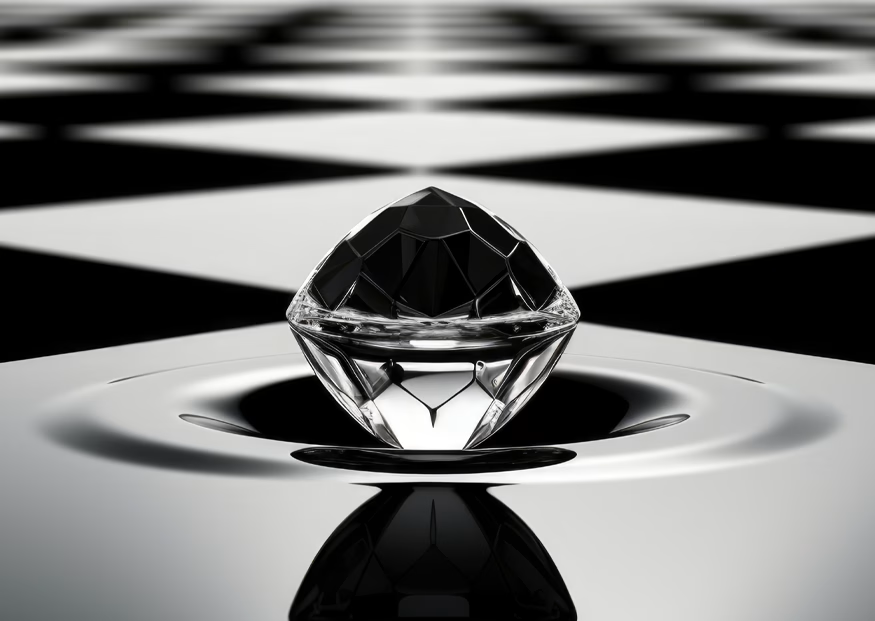
Diamonds are more than just sparkling stones. They hold stories, memories, and emotions. But what often goes unnoticed is that the cut you choose doesn’t just define how your diamond reflects light- it can also reveal aspects of your personality and style. From timeless rounds to bold cushions, each diamond cut holds meaning. It’s no wonder that people gravitate toward specific shapes, often unknowingly selecting a cut that mirrors their character. We at the Indian Institute of Gems and Jewellery are here to explain how your diamond cut choice speaks volumes about who you are. The Round Cut – Classic and Timeless The most classic and popular cut, known for its unmatched brilliance and symmetry. Its 57/58 facets maximize light reflection, making it exceptionally sparkly. Choosing a round cut diamond reflects a love for tradition, elegance, and timeless beauty. People who prefer round diamonds are often loyal, dependable, and grounded. They appreciate classic aesthetics and value enduring quality over fleeting trends. The round cut, with its perfect symmetry and exceptional brilliance, mirrors those who believe in consistency and perfection. The Princess Cut – Bold with a Modern Twist Square or rectangular with sharp, clean edges and brilliant faceting. A modern favourite for its sparkle and contemporary look. The sharp angles and clean lines of the princess cut diamond suggest a personality that is ambitious, modern, and driven. If you’re someone who likes structure but enjoys taking bold steps, this cut likely speaks to you. It appeals to those who balance sophistication with a contemporary edge, often natural leaders who aren’t afraid to stand out. The Cushion Cut – Romantic and Nostalgic A square or rectangular shape with rounded corners and soft edges, resembling a pillow. Known for its vintage charm and romantic appeal. Soft corners and vintage vibes make the cushion cut a favourite among old souls and romantics at heart. If this is your choice, you probably love stories, nostalgia, and all things timeless with a touch of softness. You may be someone who cherishes quiet moments, values emotional connection, and finds beauty in the imperfect. The Oval Cut – Elegant and Unique An elongated version of the round cut, offering a flattering, elegant shape with brilliant sparkle. It creates the illusion of longer fingers. The oval cut offers the brilliance of the round with a distinctive elongated shape, often chosen by those who are creative, graceful, and a little unconventional. If you love this cut, you likely have a modern eye but respect tradition. You carry an understated confidence and enjoy adding a personal twist to classic choices. The Emerald Cut – Sophisticated and Discerning Rectangular with long, clean facets arranged like steps. It emphasizes clarity and elegance over sparkle, with a sleek, sophisticated appearance. Emerald cuts are less about sparkle and more about clarity. They reveal everything—flaws and all. If you’re drawn to emerald cuts, you’re likely a person who values honesty, depth, and intellect. You are calm under pressure, have a refined sense of taste, and prefer quiet luxury over loud statements. The Pear Cut – Free-Spirited and Emotional A teardrop-shaped hybrid of round and marquise cuts. It’s elegant and unique, often worn with the point facing the fingertip. The teardrop shape of the pear cut resonates with those who wear their hearts on their sleeves. It suggests a dynamic personality that is both emotional and energetic. If you prefer this cut, you’re likely sensitive yet strong, intuitive, and full of passion. The Marquise Cut – Dramatic and Ambitious A dramatic, eye-catching shape with pointed ends and an elongated body. It appears larger than other cuts of the same carat weight. The dramatic flair of the marquise cut reflects a personality that loves attention and has a flair for drama, in the best possible way. This choice is often made by those who are ambitious, expressive, and not afraid to challenge convention. With its royal roots, it’s a favourite of those who enjoy luxury and uniqueness. The Heart Cut – Playful and Romantic The ultimate symbol of romance, shaped exactly like a heart. A complex cut requiring skilled craftsmanship to maintain symmetry and brilliance. Choosing a heart-shaped diamond says you embrace emotion and love freely. It’s the ultimate expression of sentiment and is often chosen by those who are deeply romantic, fun-loving, and idealistic. You’re someone who celebrates love in all its forms and isn’t afraid to show it. While each cut reflects an element of personality, it’s important to remember that every diamond is unique, just like you. Sometimes, your chosen cut may reflect your current phase in life, your aspirations, or even your sentimental values. In the end, diamonds don’t just shine—they speak. At IIGJ, we believe that understanding gems means understanding people.Our programs help you master the art and science behind diamonds, beyond the 4Cs. Explore our Diamond Grading, Gemmology and Jewellery Design courses at www.iigj.org and begin your journey into the world of diamonds, design, and personal storytelling.
The Importance of Gemstone Certifications and How to Interpret Them
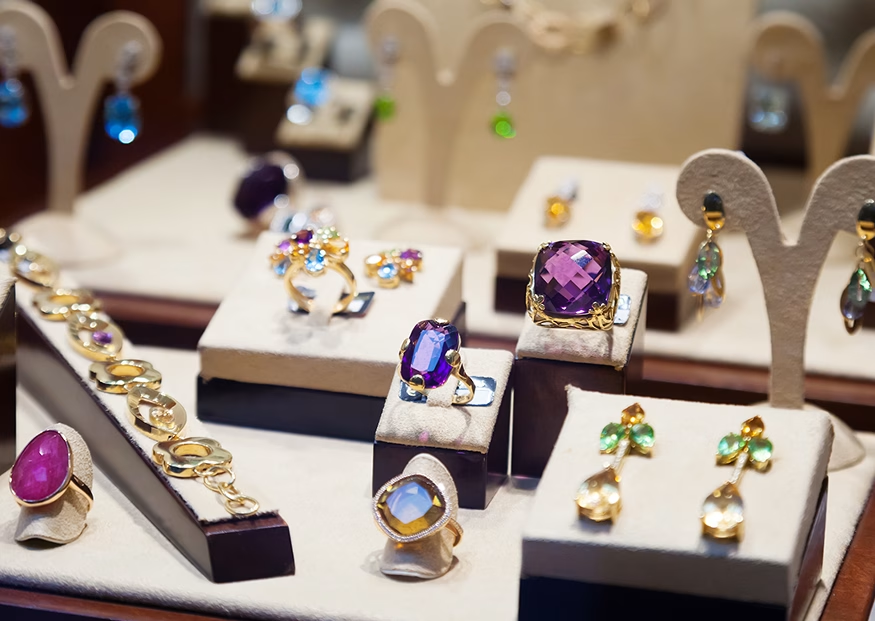
In the intricate world of gemstones, ensuring authenticity and understanding the true value of a gem is paramount. Whether you’re a jeweller, collector, or enthusiast, gemstone certifications serve as a vital tool in verifying the quality and characteristics of these precious stones. This guide delves into the significance of gemstone certifications and provides insights on how to interpret them effectively. What Is a Gemstone Certification? A gemstone certification, often referred to as a gemmological report, is an official document issued by a recognized gemmological laboratory. It provides a detailed analysis of a gemstone’s attributes, including its type, weight, clarity, cut, and any treatments it may have undergone. This certification acts as a gemstone’s “passport,” offering assurance about its authenticity and quality. How to Read a Gemstone Certification Each certificate contains vital information such as: Now comes the question: How to Interpret a Gemstone Certificate? We should know understanding a gemstone certificate involves familiarizing oneself with the various components detailed within: 1. Identification This section specifies the type of gemstone (e.g., ruby, sapphire), its variety, and whether it’s natural or synthetic. 2. Measurements and Weight Provides the gemstone’s dimensions (length, width, depth) and weight in carats, essential for determining size and value. 3. Cut Types Assesses the quality of the gemstone’s cut, including its proportions, symmetry, and polish, which influence brilliance and overall appearance. 4. Treatment / Enhancement Information Discloses any enhancements or treatments the gemstone has undergone, such as heating, irradiation, diffusion, Fracture filling, dyeing, coating, etc. 5. Origin Determination Some certificates may indicate the geographic origin of the gemstone, which can impact its value and desirability. 6. Security Features Authentic certificates often incorporate security measures like holograms, QR codes, or embossed seals to prevent forgery. Where to get a reliable certification? When it comes to gemstone certification in India, the IIGJ Research & Learning Centre (IIGJ RLC) stands at the forefront of scientific testing, gemstone analysis, and education. Located in Jaipur and Delhi, IIGJ RLC is a premier institution under the banner of GJEPC. It offers: Whether you’re a professional jeweller or a student looking to build a career in gemmology, associating with a trusted certifying body like IIGJ RLC ensures credibility and industry alignment.