



Pearls, Properly: Natural, Cultured, Freshwater and South Sea, Plus Five Ways to Spot a Fake
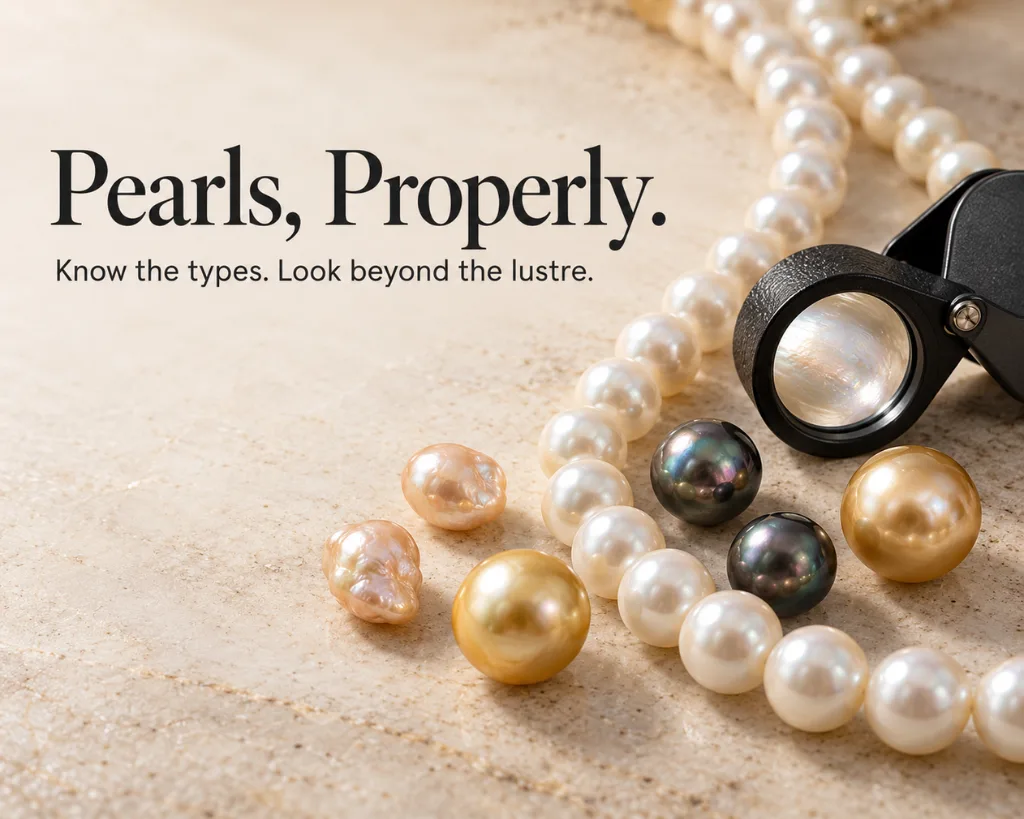
Pearls are the one gem most Indian households already own and almost nobody can classify. A strand comes down through a family, gets described as “Basra” or “real”, and is never examined again. Meanwhile the market carries at least four genuinely different products under the same word, priced anywhere from a few hundred rupees to several lakhs. Knowing which is which is basic consumer literacy. Unlike every other gem in the trade, a pearl is not mined and not cut. It grows inside a living mollusc, layer by layer, as nacre is deposited around an irritant. Its lustre, its surface and its durability all come from that nacre. Which is why learning how to identify real pearls starts with understanding how the nacre got there. Natural versus cultured: The distinction that sets the price A natural pearl forms without human involvement, when an irritant enters a mollusc by chance. These are extraordinarily rare. Historic Gulf fisheries, the source of what the Indian trade calls Basra pearls, are largely exhausted. That is why genuine natural pearls of any size now belong to the auction market rather than the retail one. A cultured pearl is grown in a farmed mollusc after a technician surgically inserts a nucleus, usually a shell bead, along with mantle tissue. The mollusc then does exactly what it would do naturally: it coats the intruder in nacre. The pearl that results is a real pearl. It is not an imitation. The cultured versus natural pearls question is about how the process began, not about whether the material is genuine. More than 99 per cent of pearls sold today are cultured. The practical consequence is nacre thickness. A natural pearl is nacre almost all the way through, while a bead-nucleated cultured pearl may carry only a thin layer over a large bead. That is why two pearls of identical size can differ enormously in lustre and durability. The four types of pearls you will actually meet • Freshwater pearls are grown in mussels, mostly in China, and make up the overwhelming majority of the affordable market. They are often tissue-nucleated, so the nacre is solid, and they tend to be less perfectly round. Colours run from white to peach and lavender. • Akoya pearls are saltwater pearls farmed principally in Japan and China. They are small, exceptionally round and mirror-bright, and they give the classic white pearl necklace its look. • South Sea pearls grow in the large Pinctada maxima oyster around Australia, Indonesia and the Philippines. They are the biggest commercial pearls, appearing in white, silver and a distinctive golden shade, with thick nacre, a soft satiny glow and the highest prices in cultured pearls. • Tahitian pearls come from the black-lipped oyster of French Polynesia. They are naturally dark, showing grey, green, aubergine and peacock overtones rather than a flat black. How pearls are graded Pearls are not graded on the 4Cs. Diamonds and coloured stones have their own frameworks, and we cover the coloured-stone version in the 5Cs of coloured gemstones. Pearl grading rests on seven factors: lustre, nacre thickness, surface quality, shape, colour, size and, for a strand, matching. Lustre is the one that decides value. Hold a pearl at arm’s length and look for a sharp, bright reflection with visible contrast between light and dark. A chalky, milky or flat appearance means thin or poorly deposited nacre, and no amount of perfect roundness compensates for it. Surface is judged by how few blemishes, pits and ridges interrupt the nacre, while shape runs from round through off-round, drop, button, baroque and circled. On a strand, matching means the consistency of size, colour and lustre across every bead, and it often costs more than any single pearl in the strand. Five ways to run a real pearl test at home 1. The tooth test. Rub the pearl gently against the edge of a front tooth. Nacre is microscopically layered and feels faintly gritty. Glass and plastic imitations feel glassy and smooth. 2. Look into the drill hole. Under a loupe, a real pearl shows a clean, sharply defined hole, often with a visible boundary between nacre and bead. Imitations tend to show chipped or flaking coating around the opening. 3. Check for imperfection. No two natural or cultured pearls are identical. A strand in which every bead is flawlessly uniform in shape, colour and surface is almost certainly manufactured. 4. Temperature and weight. Real pearls feel cool for a moment before warming, and denser than plastic beads of the same size. 5. Magnify the surface. At 10x, nacre shows a fine, slightly irregular grain. Imitations show a sprayed or painted surface, sometimes with visible orange-peel texture. These tests separate real from fake. They do not separate natural from cultured. That needs X-ray radiography at a gemmological laboratory to image the internal growth structure, and it is the only definitive answer. For anything sold as a natural or Basra pearl at a natural-pearl price, a lab report is not optional. Living with pearls Nacre is soft, at around 2.5 to 4.5 on the Mohs scale, and it is organic, which makes pearls the most vulnerable material in most jewellery boxes. Perfume, hairspray and cosmetics all attack it, so the old rule holds: pearls go on last and come off first. Never use an ultrasonic cleaner; wipe them with a soft damp cloth. Store them flat and away from harder stones, somewhere with a little humidity, because nacre can craze as it dries. Where pearls sit in a Gemmology Career Pearls catch students out, precisely because the usual instruments tell you less than they do with a faceted stone. Identification leans on close observation, surface reading and specialised imaging rather than a refractometer. That observational discipline is built through the Diploma in Gemmology and the gem identification certificate, and it is the foundation of laboratory and valuation work across the trade. If the technical side of gems
BIS Hallmarking and the Six-Digit HUID: What Every Gold Buyer Should Be Able to Read
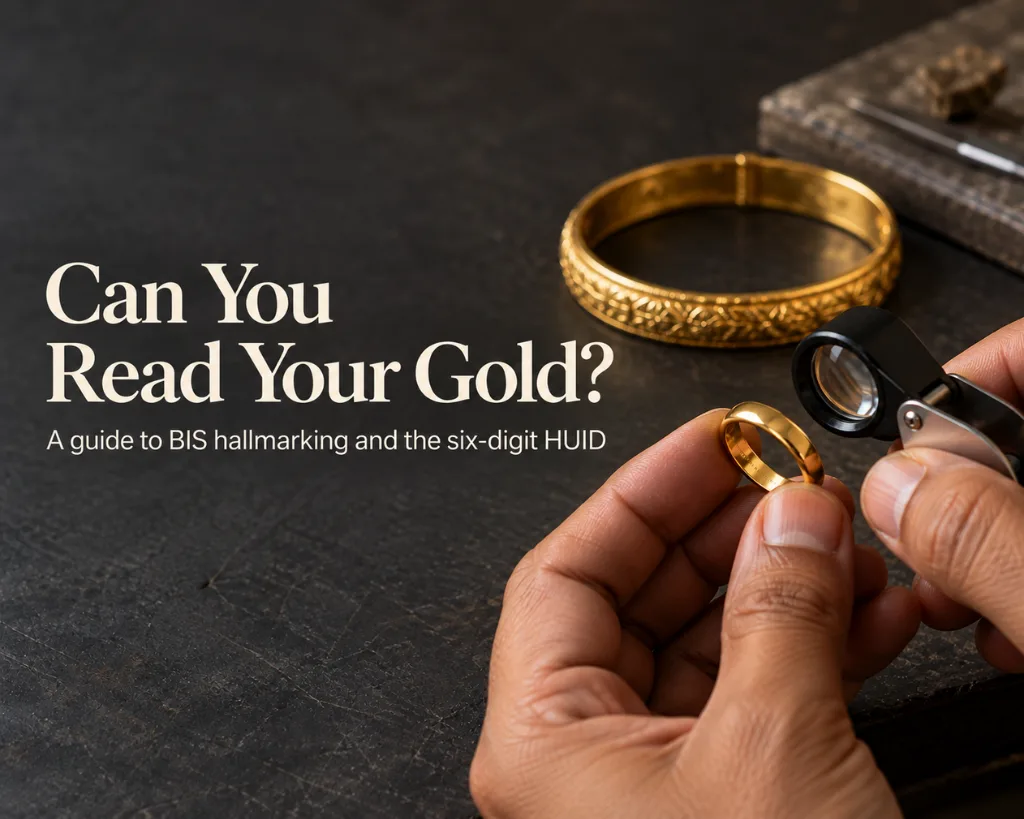
Almost every gold buyer in India has now heard that jewellery must be hallmarked. Far fewer can actually read the marks. The stamps are tiny, they are usually tucked inside a bangle or on the back of a pendant, and the shop rarely walks you through them. Yet those three marks are the only independent statement of purity you will ever get on a piece of gold, and learning to read them takes about two minutes. A BIS hallmark on gold in India is not a brand, a guarantee of workmanship, or a valuation. It certifies one thing: that a sample from the piece was assayed at a BIS-recognised centre and found to contain the fineness of gold stamped on it. That is a narrower promise than most buyers assume, and a more useful one. The Three Marks on a Hallmarked Piece The hallmark was simplified in 2021. Older jewellery may carry four or five stamps, including the jeweller’s identification mark and the assaying centre’s mark. Anything hallmarked under the current system carries three: If any of the three is missing on gold jewellery bought new in a notified district, that is your first question at the counter, not an afterthought. Reading the purity grade: What 916 actually means The 916 hallmark meaning is the one buyers ask about most, and it is straightforward. The number is parts of gold per thousand. So: • 22K is stamped 22K916, which is 91.6 per cent gold • 18K is stamped 18K750, which is 75 per cent gold • 14K is stamped 14K585, which is 58.5 per cent gold • 20K is stamped 20K833, 23K is stamped 23K995, and 24K is stamped 24K999 The remaining percentage is alloy, usually copper, silver, zinc or palladium, and it is not an impurity. It is what makes gold hard enough to hold a stone or survive daily wear. Which karat suits which piece is a design decision as much as a purity one, and we have written about that trade-off separately in 22K, 18K or 14K: which karat for which piece. What the six-digit HUID is, and What it is not HUID stands for Hallmark Unique Identification. It is a six-digit alphanumeric code assigned to an individual article at the time of hallmarking, and no two pieces share one. Since April 2023, gold jewellery sold in notified districts must carry it. The HUID number meaning is often misread in two directions. It is not a purity grade, because the fineness is a separate mark. And it is not a certificate of quality, weight or design origin. What it is, is traceability: the code links the piece back to a record showing which jeweller registered it, which centre hallmarked it, and what purity it was assayed at. That record is what makes the mark verifiable rather than decorative. How to check a hallmark on gold in under a minute Anyone can verify a HUID without visiting a lab. The BIS Care app, published by the Bureau of Indian Standards and available free on both mobile platforms, has a “Verify HUID” function. You enter the six-digit code and it returns the registered jeweller, the hallmarking centre, the article type, its purity and the date it was hallmarked. Three habits make this useful rather than a party trick. Read the HUID off the piece yourself under the shop’s loupe, not from the invoice. Check that the purity the app returns matches both the stamp and the rate you are charged. And confirm the article description matches what is in your hand, because a code registered against a chain should not turn up on a ring. When the numbers do not match A mismatch is not always fraud. Codes get mistyped on invoices, and app records occasionally lag. But a HUID that returns nothing, returns a different purity, or returns a different article is a reason to pause the purchase rather than negotiate around it. Ask for the hallmarking certificate, ask which centre assayed the piece, and if the answers are vague, walk. Consumers can also raise a complaint through BIS directly. That mechanism exists precisely because the mark is meant to be checkable by the buyer, not only by the trade. One older practice worth knowing: gold sold as “KDM” was soldered with cadmium, a hazardous method since phased out. KDM is not a purity grade, and it never substitutes for a hallmark. Why this belongs in a jeweller’s training, not just a buyer’s From the other side of the counter, hallmark literacy is a sales skill. A salesperson who can hand a customer a loupe, point out the triangle, explain 916 against 750 and pull up the HUID on the app closes high-value gold purchases that a scripted pitch loses. It converts suspicion into confidence, which is the actual job on a gold counter. That is why purity, assaying and valuation sit inside the gold appraiser and retail training programmes at IIGJ rather than being treated as back-office knowledge, and why diamond and gemstone grading runs through the Diploma in Gemmology and the professional certificate courses. If you are weighing a career on the technical side of the trade, the gemmology and gem identification route is where this kind of reading becomes a profession. Learning to read three small stamps will not make anyone a gemmologist. It will, however, mean you never again buy gold on trust alone. And if you are considering the industry as a career, it is the first piece of professional knowledge worth owning. You can see the full range of programmes on the programs page or start an enquiry through admissions.
Wedding Season 2026: Jewellery Trends That Will Define the Year
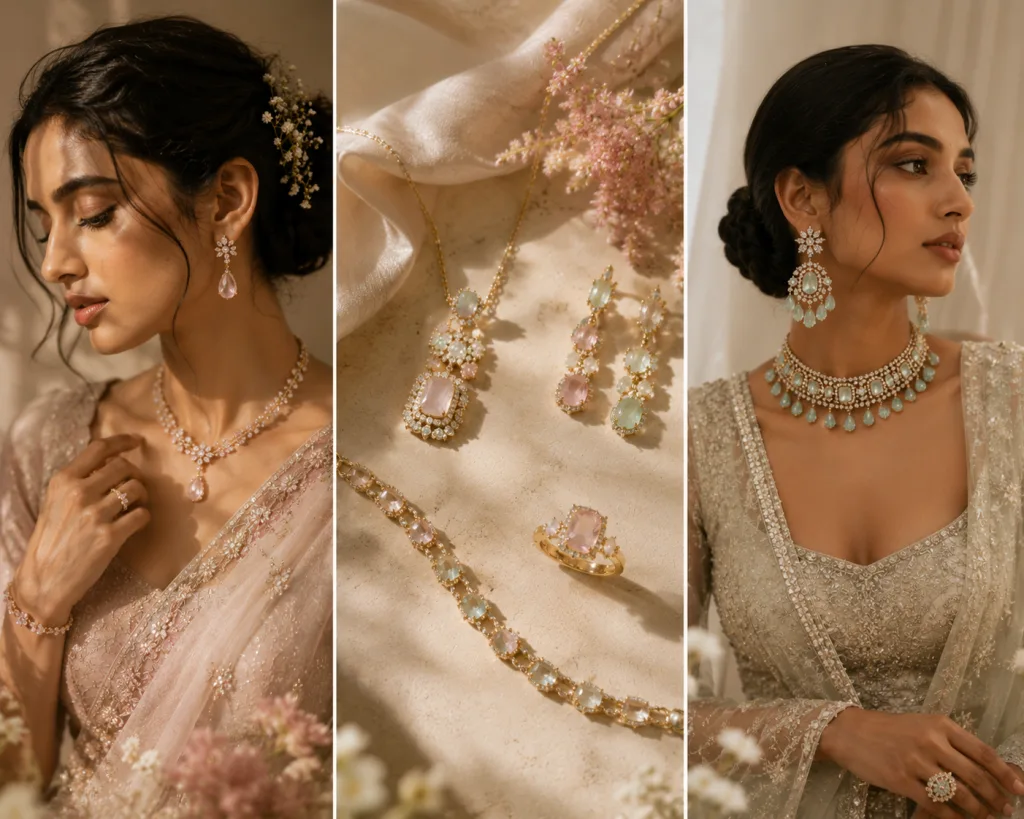
The 2026 wedding season is expected to reflect a clear shift in how jewellery is approached. It is no longer driven solely by scale or tradition, but by thoughtful styling, versatility and long-term usability. Jewellery is being chosen not just for the occasion, but for how it performs across multiple moments. At the centre of this shift is a design-first approach, where pieces are both visually impactful and practically wearable. Statement jewellery is being reimaginedChokers paired with layered necklaces, particularly in Polki and Kundan, are expected to remain dominant. However, the emphasis will be on achieving a sense of grandeur without excessive weight. Brides are increasingly prioritising jewellery that photographs well, remains comfortable through extended ceremonies and delivers a strong visual presence. Jadau and antique finishes are also set to see renewed relevance, especially for traditional ceremonies, but with more refined and balanced styling. A shift toward lightweight designHeavy jewellery is not disappearing, but its role is evolving. Brides, bridesmaids and guests are likely to prefer lighter, re-wearable pieces that extend beyond the wedding. Detachable elements, stackable designs and adaptable jewellery will become more prominent. This reflects a broader move toward practical luxury, where comfort and repeat usability are key considerations. Softer colour palettesAs bridal fashion continues to incorporate pastel tones and softer palettes, jewellery will follow a similar direction. Gemstones such as aquamarine, rose quartz and subtle emerald combinations are expected to complement traditional gold tones. The overall aesthetic is moving toward a more refined and balanced look. The evolving mangalsutraThe mangalsutra is being reinterpreted as a piece of everyday jewellery. Sleeker chains, minimal pendants and understated detailing are expected to define its evolution, making it more adaptable to contemporary lifestyles while retaining its symbolic value. Groom jewellery gains importanceGroom jewellery is becoming a considered part of wedding styling. Structured Kanthi malas, brooches, decorative button sets and minimal bracelets are emerging as key elements. The focus remains on balance and proportion, ensuring that jewellery complements the sherwani rather than overpowering it. This shift reflects a growing awareness of complete and cohesive styling for grooms. Styling as a strategic choiceAnother defining trend is the move from purchasing single heavy sets to curating jewellery across different functions. Brides are expected to select distinct pieces for mehendi, sangeet, wedding and reception, creating coordinated looks rather than relying on one set throughout. Final TakeWedding jewellery in 2026 is set to reflect a more considered consumer mindset. The emphasis is on combining design, comfort and long-term value. Jewellery is no longer limited to occasion wear but is increasingly seen as part of a broader, wearable collection. This evolution highlights how the industry is aligning more closely with modern lifestyles while maintaining its connection to tradition.
IIGJ and IIT Madras Partner to Advance Lab Grown Diamond Education in India
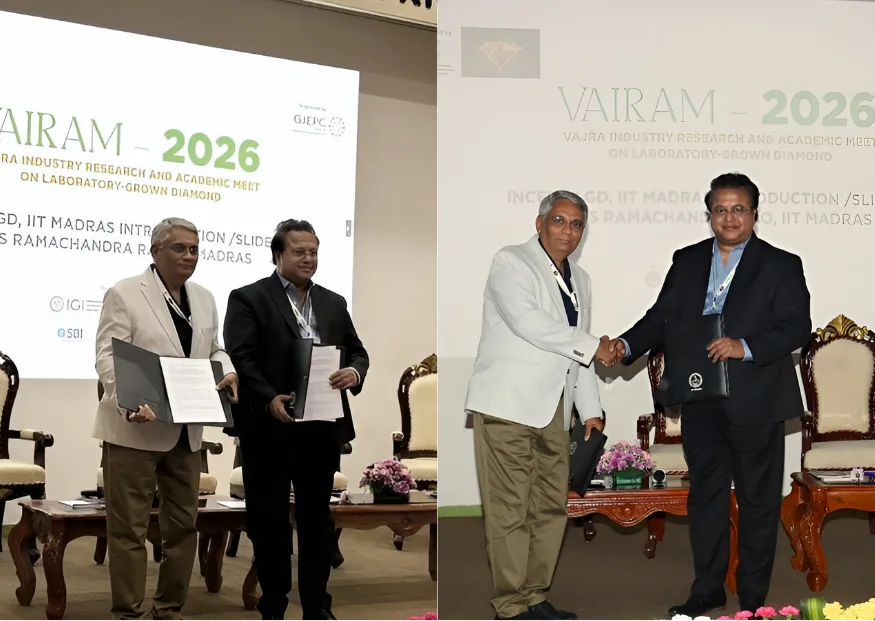
India’s gems and jewellery industry is entering a new phase of innovation with the Indian Institute of Gems & Jewellery (IIGJ) partnering with the India Centre for Lab Grown Diamond (InCent-LGD), IIT Madras. Formalised through a Letter of Intent at VAIRAM 2026, this collaboration marks a significant step toward structured lab grown diamond (LGD) education in India. The Letter of Intent, signed by Mr. Debasish Biswas, CEO of IIGJ, and Prof. M. S. Ramachandra Rao, Head of InCent-LGD, IIT Madras, brings together industry-led jewellery education and advanced scientific research. The objective is clear: to build a strong talent pipeline equipped with expertise in lab grown diamond technology, jewellery manufacturing, and materials science. Bridging Industry and Academia in LGD Technology As part of this initiative, IIGJ and IIT Madras will introduce certification and diploma programmes in lab grown diamond technology. These programmes are designed to combine practical jewellery training with research-driven academic knowledge, offering a comprehensive understanding of LGD production, grading, applications, and innovation. This integrated approach ensures that students and professionals gain both technical expertise and hands-on industry exposure, making them industry-ready for the rapidly growing lab grown diamond sector in India. Meeting the Demand of a Growing LGD Market The global lab grown diamond market is expanding at a rapid pace, driven by technological advancements, evolving consumer preferences, and increasing demand for sustainable jewellery. India, already a global leader in diamond cutting and polishing, is now strengthening its position in LGD manufacturing and innovation. This collaboration directly addresses the need for skilled professionals trained in modern diamond technologies. By aligning education with industry requirements, IIGJ and IIT Madras are supporting the long-term growth of the Indian gems and jewellery industry. Strengthening Jewellery Education in India For the Indian Institute of Gems & Jewellery, this partnership reinforces its commitment to future-focused education as IIGJ continues to evolve its curriculum to include emerging areas like lab grown diamonds and sustainable practices. At the same time, IIT Madras, through InCent-LGD, contributes cutting-edge research in diamond growth technologies and advanced materials. Together, the two institutions create a powerful ecosystem for innovation, skill development and knowledge exchange. A Step Toward Future-Ready Talent This partnership reflects a broader shift toward industry-academia collaboration in the jewellery sector, where education is closely aligned with real-world industry needs. Such initiatives not only enhance India’s global competitiveness but also open up new career opportunities in lab grown diamonds, jewellery technology, and sustainable luxury. As the LGD segment continues to grow, the demand for trained professionals will only increase. Structured programmes like these will play a key role in shaping the next generation of jewellery professionals and diamond technologists. Shaping the Future of Lab Grown Diamond Education With this collaboration announced at VAIRAM 2026, lab grown diamond education in India is becoming more structured, research-driven, and industry-aligned. It signals a strong move toward building capabilities that match global standards. For those looking to build a career in the evolving lab grown diamond and jewellery industry, the right education is essential. Explore specialised programmes at the Indian Institute of Gems & Jewellery (IIGJ) and take the first step toward a future in this fast-growing sector.
How Gen Z Is Shaping the Future of Jewellery

Jewellery has become one of the strongest forms of identity for Gen Z, a generation that values self-expression, purpose and personal meaning in every choice they make. Earrings, especially, have evolved into a style signature rather than an accessory. Their preferences are reshaping the jewellery market, influencing designers, brands and even jewellery education. This shift is also reflected in the kind of learning young talent seeks today at IIGJ emphasising design thinking, sustainability, materials understanding and trend interpretation that match the evolving landscape. Gen Z’s approach to jewellery goes beyond fashion. It blends comfort, creativity, values and technology. Here’s a sharper look at what’s shaping their choices. 1. Minimalist Style, Maximum Versatility Gen Z gravitates toward clean, simple silhouettes that pair with everything. Think sleek bangles, minimal rings, soft chains, and lightweight everyday pieces. These accessories fit into a lifestyle that values comfort and consistency, without losing aesthetic intent. 2. Statement Pieces: Sculptural and Playfully Bold When they want impact, Gen Z chooses sculptural shapes, asymmetric designs and exaggerated forms. These earrings and bracelets elevate basics instantly and reflect a preference for individuality over trend-following. 3. Sustainable Jewellery: Style with Purpose Recycled metals, lab grown diamonds and ethically sourced stones resonate strongly with this generation. Sustainability is no longer a niche preference, it is a key buying consideration. 4. Chains and Neck Pieces Take Center Stage Chunky Cuban links, slim box chains, layered neck stacks, pendants with personal symbols is becoming one of Gen Z’s strongest fashion languages. Today, everyone uses chains to define their aesthetic, whether bold, soft or experimental. 5. Layering Culture: Personal Stories in Stacks Layered necklaces, stacked rings, mixed-metal bracelets and curated ear stacks are now everyday styling. Layering lets Gen Z build a look that evolves with mood and moment, making accessories feel personal instead of prescriptive. 6. Mixed Metals: Blending Tones and Textures Gold with silver, silver with platinum. Gen Z is comfortable mixing metals to create layered, textured looks that feel modern and expressive. 7. Vintage Revival: Old-School With a Twist Retro hoops, 90s-inspired shapes and Y2K silhouettes are returning with contemporary finishes. Nostalgia remains a powerful design influence. 8. Customised Jewellery: Personal Stories Made Wearable Initials, nameplates, birthstones and personalised motifs hold strong emotional value. Gen Z gravitates toward jewellery that feels like an extension of their identity. Where This All Leads Gen Z’s choices are reshaping how accessories are designed, produced and marketed. Their focus on authenticity, innovation and values is influencing brands, manufacturing practices and even how the industry approaches design thinking and craftsmanship. Jewellery today is no longer just about form. It reflects cultural shifts, personal identity and changing expectations around sustainability and expression.
Why the Jewellery Industry Is a Brilliant Career Choice
The global jewellery market continues to grow steadily, driven by rising demand for unique, meaningful and high-value pieces. For creative professionals, the industry offers a rare opportunity to combine artistic skill with business potential. As consumer preferences shift toward personalised design, ethical sourcing and innovative craftsmanship, the jewellery sector has become one of the most promising spaces for young talent. This blend of creativity and commerce has opened the door to new career paths that go beyond traditional design roles. Whether you are drawn to gemstones, digital tools, merchandising or brand building, the industry offers a wide spectrum of opportunities that reward both imagination and skill and IIGJ as an institution plays a key role in preparing the next generation of professionals to thrive in this evolving landscape. A Market Full of Opportunities The global jewellery market continues to grow steadily and is projected to reach USD 480-500 billion by 2030, while India remains one of the world’s strongest jewellery economies with a market valued at USD 85-90 billion. Demand is increasingly driven by distinctive, story-led pieces, with rising interest in coloured gemstones such as turquoise and opals. Consumers today value rarity, craftsmanship and cultural relevance, giving designers and creators greater freedom to innovate beyond traditional formats. At the same time, digital retail has removed entry barriers for independent designers and small brands, enabling global reach without physical stores. Another key shift is the rapid growth of men’s and gender-neutral jewellery, including chains, bracelets and statement pieces, reflecting changing fashion norms and Gen Z’s comfort with self-expression. Together, these trends have expanded career possibilities across design, gemmology, manufacturing and merchandising, making the jewellery industry one of the most opportunity-rich creative sectors today. Understanding Today’s Jewellery Landscape The jewellery industry is evolving in three major directions. – First, sustainability is becoming a defining factor in buying decisions. Consumers want to know where materials come from and whether they are responsibly sourced. – Second, personalisation is more important than ever. Custom-made jewellery, handmade pieces and one-of-a-kind gemstone selections are in high demand. – Third, blended retail is reshaping the market. Traditional stores remain influential, but online platforms now play a major role in product discovery and purchase. Together, these factors create an ecosystem where creativity, craftsmanship and market knowledge work together to shape successful careers. How Creativity Drives Value Jewellery sits at the intersection of design and commerce. Designers need to create pieces that are aesthetically pleasing while also understanding their commercial potential. Online marketplaces have made it easier for artisans to showcase their work. Visibility is no longer restricted to local buyers. Global audiences can now discover new styles, techniques and interpretations through digital platforms. For creative professionals, this means a wider reach, a stronger brand presence and direct access to customers who value originality. Skills That Are Building Strong Careers As the industry becomes more specialised, structured education is playing a crucial role in preparing professionals for real-world challenges. Training programs in gemmology, CAD design, diamond grading, merchandising and manufacturing help students understand both the technical and artistic sides of the industry. Strong foundational learning allows creative individuals to move confidently into roles such as jewellery designers, merchandisers, gemmologists, entrepreneurs, CAD specialists or retail professionals. With the right guidance and exposure, students can build careers that are not only creatively fulfilling but also financially rewarding. A Growing Space for Creative Talent The jewellery industry continues to expand with new technologies, evolving customer expectations and a global marketplace that values originality. For creative professionals, it is a space where ideas become tangible products. As global markets open up and new categories emerge, from coloured gemstones to gender-neutral jewellery, the scope for innovation continues to grow. Success in this space increasingly belongs to those who combine creative vision with technical skill, industry awareness and an understanding of how jewellery is designed, produced and experienced today.
Cartier’s Love Unlimited Bracelet: Evolution of a Timeless Icon
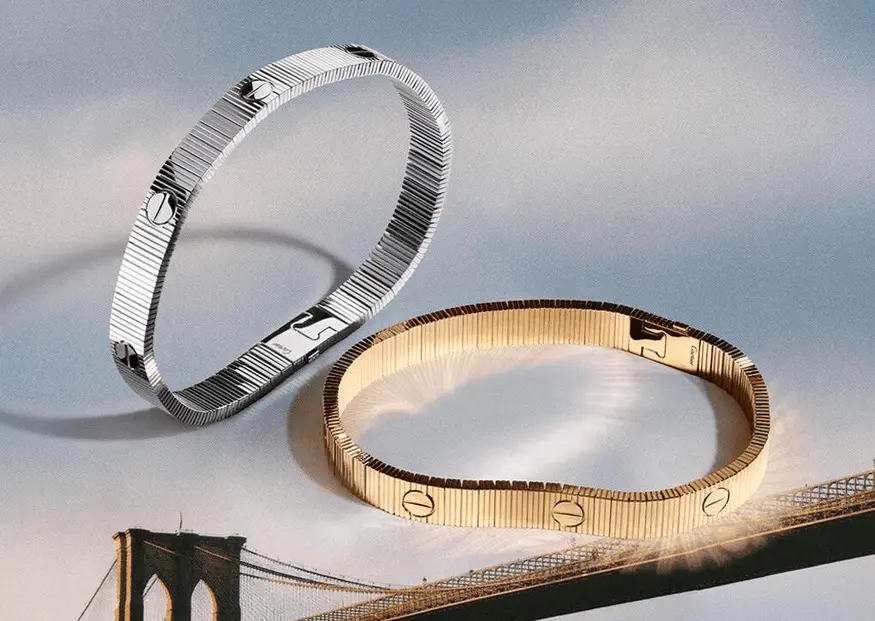
Love Redefined for a New Era Love, like design, is never static. It evolves with time growing bolder, more personal and deeply expressive. For over a century, Cartier has reflected these by creating designs that transcend trends to become symbols of timeless emotion. The maison’s latest creation, the Love Unlimited bracelet, reinterprets one of its most iconic designs from 1969 for a new generation that views love as fluid, independent, and boundless. The original Cartier Love bracelet was a revolution in jewellery design. Its screw-locked form symbolized permanence, a modern take on eternal devotion. It wasn’t just a piece of jewellery; it was a philosophy. Now, 56 years later, Cartier has reimagined this classic to mirror how love itself has changed in today’s world which is no longer defined by convention, but celebrated for its individuality and openness. A Legacy Reinvented The Love Unlimited collection carries forward the DNA of the original design while introducing movement, flexibility, and freedom. Built with over 200 precision-engineered components, the bracelet embraces innovation without losing the spirit of heritage. Its flexible structure adapts effortlessly to the wrist, making it feel almost alive and capable of bending, curving and flowing like emotion itself. This new design allows for endless personalization. The bracelet can be stacked, linked with others or even styled as a statement bag charm, a gesture that resonates with the versatility of modern relationships. Where love was once defined by permanence alone, today it is understood through connection, growth, and shared journeys. Cartier translates this shift seamlessly into form, merging sentiment with technical brilliance. Craftsmanship in Motion Every Cartier creation is a balance of engineering and emotion, and the Love Unlimited bracelet exemplifies this harmony. The maison spent years perfecting the bracelet’s fluidity, developing over 100 prototypes before achieving the ideal curvature and movement. Its patent-pending invisible clasp ensures a seamless fit, enhancing both comfort and sophistication. This design precision isn’t just mechanical, it’s poetic. The way the bracelet hugs the wrist evokes intimacy, its movement echoing the rhythm of the wearer’s life. Available in White, Rose and Yellow Gold with a matching ring, the collection is a celebration of enduring affection and individuality. It reflects the kind of love that values both unity and independence, the two forces that define modern relationships. Love That Moves With Time The Love Unlimited bracelet is more than an accessory; it’s a story told through design. It represents how emotion and craftsmanship progress together. In the late 20th century, love was expressed through permanence – a locked bracelet, a shared vow. Today, it’s about self-discovery, equality, and emotional authenticity. Cartier’s reinvention captures this transformation beautifully: love that flows, adapts, and grows without losing its essence. Through its precision and poetry, the Love Unlimited bracelet reminds us that meaningful design responds to culture, emotion and time. For students and enthusiasts who study jewellery through the lens of craft, engineering and storytelling, pieces like this offer valuable insight into how icons are reimagined for new generations. At IIGJ, we continue to highlight such global design milestones to inspire young designers and deepen their appreciation for the art and mechanics of fine jewellery.
2025 Groom Jewellery Trends: Bold, Versatile and Unapologetically Stylish
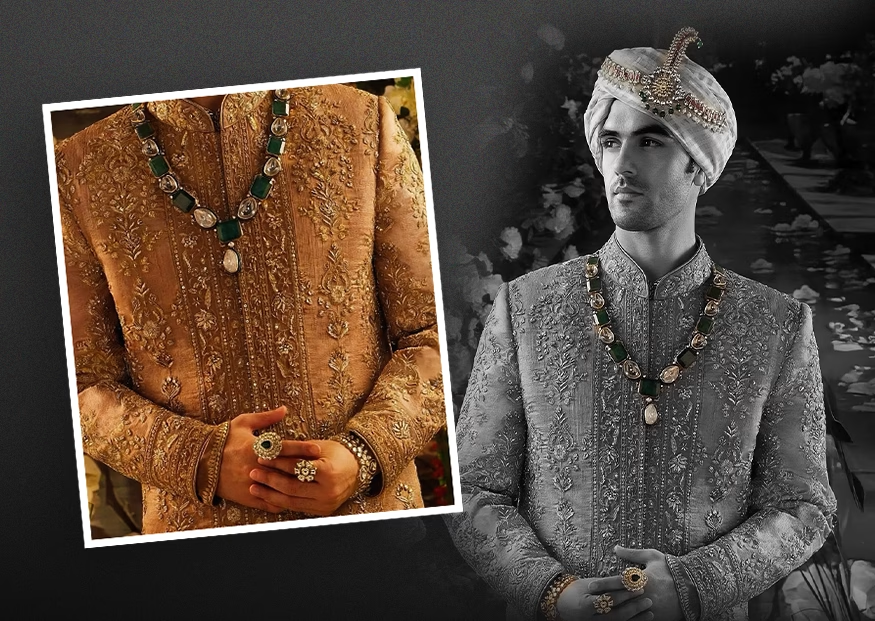
In 2025, men’s wedding fashion is entering a new chapter that celebrates individuality, craftsmanship, and self-expression through jewellery. No longer limited to a simple chain or ring, today’s groom views jewellery as an essential part of his identity and personal style. From beaded layers to sculpted cufflinks, the modern groom’s jewellery choices are thoughtful, elegant, and deeply meaningful. Beyond the Sherwani: Layered Beads and Chains One of the biggest men’s jewellery trends of 2025 is layering. Grooms are now exploring the charm of multi-layered gemstone beads, pearls and gold chains that add dimension and depth to their look. These pieces are not just for the wedding day; they transition effortlessly to festive gatherings and formal occasions, bringing versatility and refinement to every outfit. Designers are reinterpreting traditional Indian accessories like kantha malas and navratna beads into sleeker, more modular forms. Each layer tells a story of heritage meeting modernity, reflecting the groom’s evolution in style and sensibility. Modern Heirlooms that Move with Your Style Heirloom-inspired jewellery is making a strong comeback in contemporary fashion. Grooms are choosing pendants, royal brooches, and kalgi pins that combine old-world craftsmanship with modern innovation. Whether set in gold, silver, or platinum, these pieces often feature gemstones, enamel detailing, and handcrafted motifs that blend tradition with creativity. These modern heirlooms are not meant to be worn once and forgotten. They can be restyled across occasions, from festive celebrations to formal gatherings, keeping their legacy alive through evolving fashion choices. Statement Rings and Signature Cufflinks Nothing defines refined masculinity better than a statement ring. The 2025 groom is embracing bold and sculptural designs that feature textured finishes, gemstones, and unique metalwork. Each ring tells its own story of strength and individuality. Cufflinks, once seen as purely functional, have now evolved into collectible accessories. With enamel detailing, gemstone accents, and monogram engravings, they bring personality to every look. Small yet impactful, these designs reflect confidence and attention to detail, perfect for grooms who prefer understated luxury. Bracelets and Kada Revival Beaded bracelets and minimal kadas are experiencing a strong revival in men’s jewellery. Crafted in mixed materials like gold, silver, leather, and semi-precious stones, they represent the modern man’s balance between spirituality and style. The kada, a symbol of tradition and protection, has transformed into a piece of contemporary sophistication. It’s now worn as a statement accessory that connects generations while fitting effortlessly into modern wardrobes. Rethink, Repurpose, Restyle Perhaps the most defining shift in men’s jewellery is adaptability. The new-age groom no longer reserves his jewellery for weddings alone. Instead, he invests in pieces that can be restyled for everyday wear, reflecting a mindset of sustainability and conscious luxury.Jewellery today goes beyond appearance. It embodies emotion, heritage and self-expression. Whether it’s a handcrafted ring passed down through generations or a layered chain chosen for the big day, each design carries a personal story. And there’s more than sentiment behind this trend, the men’s jewellery market is growing fast. The global men’s jewellery segment was valued at around USD 48.6 billion in 2024 and is projected to grow at nearly 10% annually through 2034. With that kind of momentum, it’s no surprise designers and brands are expanding beyond the usual rings and chains into bracelets, cufflinks, brooches and mixed-metal statements. The message is clear: jewellery for him is not niche anymore, it’s now a personal style tool. Source: Polaris
Big Rocks, Bigger Statements: The rise of oversized engagement rings
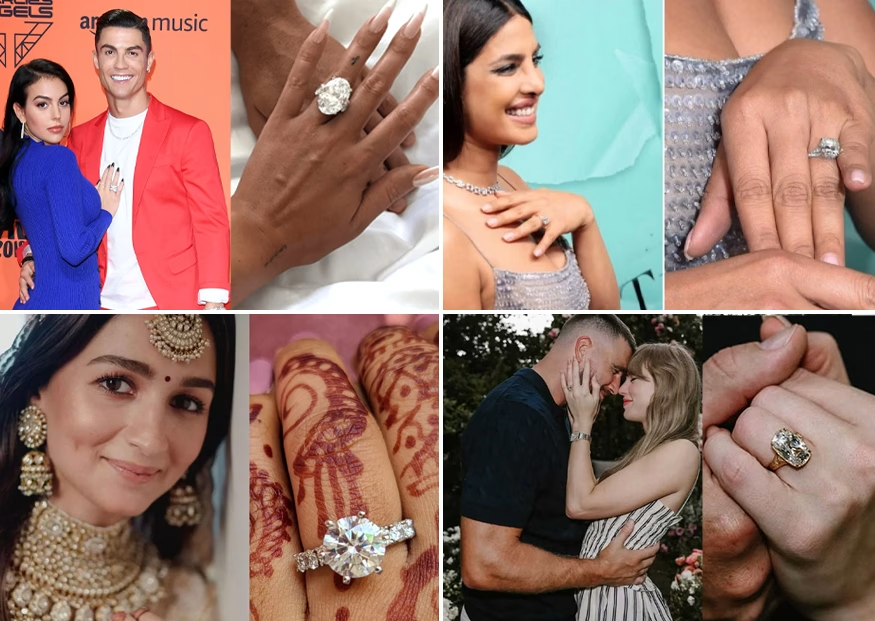
In the world of contemporary bridal jewellery, oversized engagement rings are making a striking return and not as mere accessories, but as bold declarations of individuality, emotion and artistry. These statement pieces have transformed from traditional tokens of love into expressions of personality and power.
How to Choose the Right Jewellery Course?
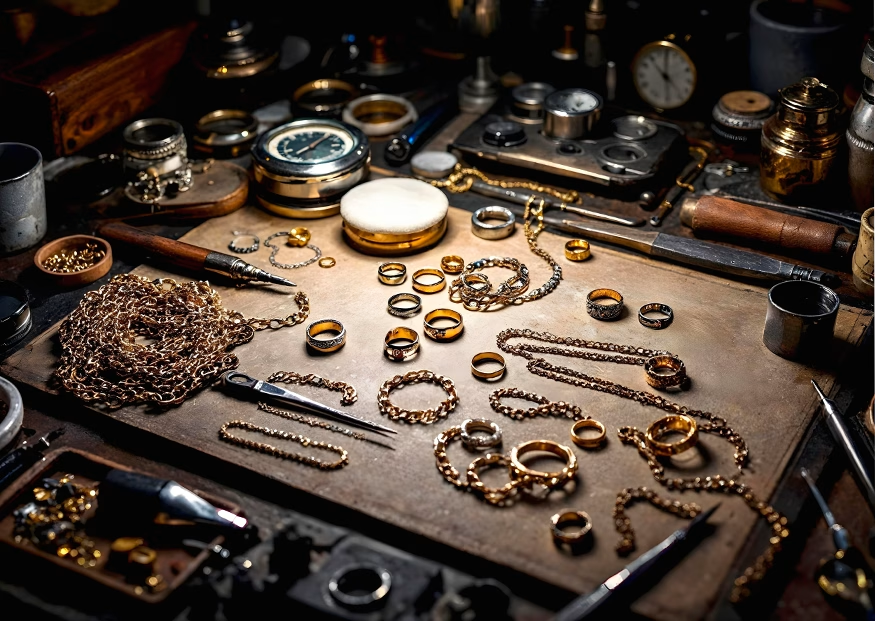
In today’s fast-evolving design landscape, jewellery is more than just an accessory- it’s a statement of identity, culture, craftsmanship, and commerce. As India continues to cement its global leadership in the gems and jewellery industry, the need for skilled professionals has never been greater. But for many aspiring talents, the first big question is: How does one choose the right jewellery course? Begin by identifying your interests. Are you someone who enjoys sketching and creative expression? Or are you drawn to the technical side of things like manufacturing and gemstone identification? Perhaps you’re business-minded and dream of launching your own jewellery brand. Knowing where your passion lies—be it design, CAD, gemmology, manufacturing, or retail—will help you narrow down the right area of study. IIGJ offers a variety of programs suited for different stages in your academic or professional journey. If you’re fresh out of school and looking to make jewellery your lifelong career, a comprehensive Undergraduate Degree program like a Bachelor of Arts in Gems and Jewellery or Bachelor of Design in Jewellery may be ideal. For graduates looking to enter the jewellery sector or shift careers, we offer Postgraduate Diplomas and Advanced Certificates. It provides long-term foundational knowledge in areas like gemmology, design theory, manufacturing, and market trends. On the other hand, if you’re already in the industry or looking to upskill, short-term courses in diamond grading, CAD, or gemstone identification may serve your goals better. All our courses are aligned with the National Education Policy (NEP) and the National Credit Framework (NCrF), allowing flexibility and credit-based progression. What matters even more than the course format is the jewellery designing institute you choose. The right jewellery institute doesn’t just teach, it immerses. From live workshop training to industry-expert mentors, from access to advanced tools to exposure through real-world projects, hands-on learning is everything in this field. Institutions like the Indian Institute of Gems & Jewellery (IIGJ), backed by the Gem & Jewellery Export Promotion Council (GJEPC), offer an unmatched ecosystem across campuses in Mumbai, Delhi, Jaipur, Varanasi, Udupi, Guwahati, and Ratnagiri. Curriculum is another important filter. In a world increasingly driven by both craftsmanship and technology, a jewellery course should seamlessly blend practical training with theoretical understanding. Look for modules that include both studio work and classroom concepts, tools like Rhino and Procreate, and a strong focus on global jewellery trends. One should check if the institute actively offers placements or has alumni working in top brands, as this indicates industry trust and relevance. Each course at IIGJ is designed with specific career outcomes in mind. Depending on your specialization, you can build a career as a Jewellery Designer, CAD Technician, Gemmologist, Manufacturing Executive, Quality Analyst, Retail Professional, or even start your own jewellery label. Our dedicated placement team and industry network help connect you with leading brands and manufacturers for internships and job placements. IIGJ Universe offers over 40 diverse programmes across India’s leading jewellery hubs, curated to serve every kind of learner—from young dreamers to career switchers. With the right start, the sparkle you bring into the world may just begin with you.Explore courses now at www.iigj.org. Admissions Open!