

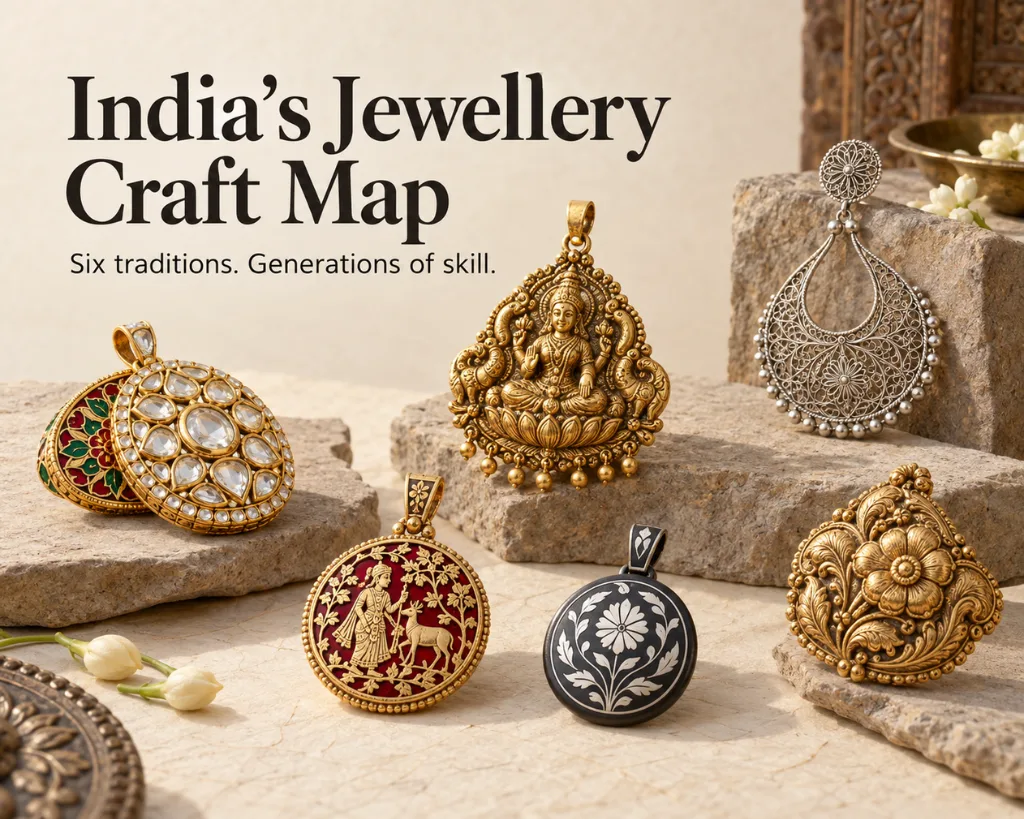
India does not have a jewellery tradition. It has several dozen, each tied to a particular town, a particular material and a particular set of hands, and most of them developed independently of one another. Cataloguing traditional Indian jewellery types by technique rather than by style is the only way the map makes sense, and it explains why a karigar trained in one cluster often cannot work in another.
Here are six of the most distinctive, with what each technique actually involves.
Kundan and Meenakari, from Jaipur and Bikaner in Rajasthan
Kundan is a setting technique, not a stone. Uncut or flat-backed gems, traditionally polki or unfaceted diamond, are bedded into a gold framework using highly refined gold foil, burnished cold around each stone until it grips. Behind the stone sits a lac core, which gives the piece body without the weight of solid gold. The work is done in stages by different specialists: the ghaarai who makes the frame, the paadh who fills it, the chilaisaaz who does the gold work, and the jadiya who sets.
Meenakari is the other half of the same tradition. Vitreous enamel is fused into engraved recesses in gold and fired colour by colour, from the most heat-resistant to the least. The reason so much Jaipur kundan meena work is reversible is that the back is enamelled while the front is set. Two complete crafts on one object.
Temple jewellery, from Nagercoil and Vadasery in Tamil Nadu
Originally made to adorn temple deities and later worn by Bharatanatyam dancers, temple jewellery is built around iconography: Lakshmi faces, peacocks, mango and lotus motifs, swan and serpent forms. It was traditionally executed in high-karat gold set with rubies, emeralds and uncut stones, with a distinctive repoussé relief that gives the metal its sculptural depth. Nagercoil remains the centre of the craft, and the style now reaches a far wider market through gold-plated and silver versions.
Silver filigree, or Tarakasi, from Cuttack in Odisha
The filigree jewellery Cuttack is known for begins as a silver ingot drawn into wire finer than a hair, then flattened, twisted, coiled and soldered into open lacework with no backing sheet at all. The structure holds only because every joint is sound. A single elaborate piece can take weeks, and the craft has survived over four centuries in the same city, still made in family workshops and still largely without machinery.
Thewa, from Pratapgarh in Rajasthan
This is the rarest of the six, and the most specific. A wafer-thin sheet of 23K gold is hand-pierced into an intricate figurative scene, such as a court procession, a hunt or a Krishna narrative, and then fused onto coloured glass at high temperature, so the glass glows through the openings in the gold. The process has been held within a single family lineage in Pratapgarh since the eighteenth century, and the number of practising artisans has been in the low dozens for years.
Bidri, from Bidar in Karnataka
Bidri is metalwork rather than goldsmithing, but it sits in the jewellery and object trade and follows the same logic. A zinc-copper alloy is cast, then engraved and inlaid with fine silver wire or sheet. The finished object is treated with a paste made from soil taken from within Bidar fort, which oxidises the alloy to deep matte black while leaving the silver bright. The soil matters, because it means the craft cannot be relocated, which is precisely what a Geographical Indication tag is designed to recognise.
Nakshi, the hand-engraved and repoussé work of Bengal and Eastern India
Nakshi refers to hand-engraved and embossed ornamentation, worked with hammer and chisel from the reverse and refined from the front. Bengali karigars have carried this skill across India for generations, and a great deal of what the trade calls “antique finish” gold depends on it. Unlike the other five, Nakshi is not tied to one town. It is a skill set that travelled, and it is the reason karigar migration is such a feature of the Indian jewellery workforce.
What the map is really showing
Several of these crafts carry Geographical Indication protection, and several are in genuine decline, not because demand has disappeared but because the transmission has broken. These techniques were taught within families over ten to fifteen years. When a younger generation moves into other work, the craft does not shrink gradually. It stops.
That is the argument for treating heritage technique as part of formal jewellery education rather than as folklore. A designer who understands how a kundan frame is bedded, or why a filigree joint fails, can design work that karigars can actually execute, and can specify traditional technique in contemporary pieces instead of imitating its appearance in casting.
Studying craft, not just style
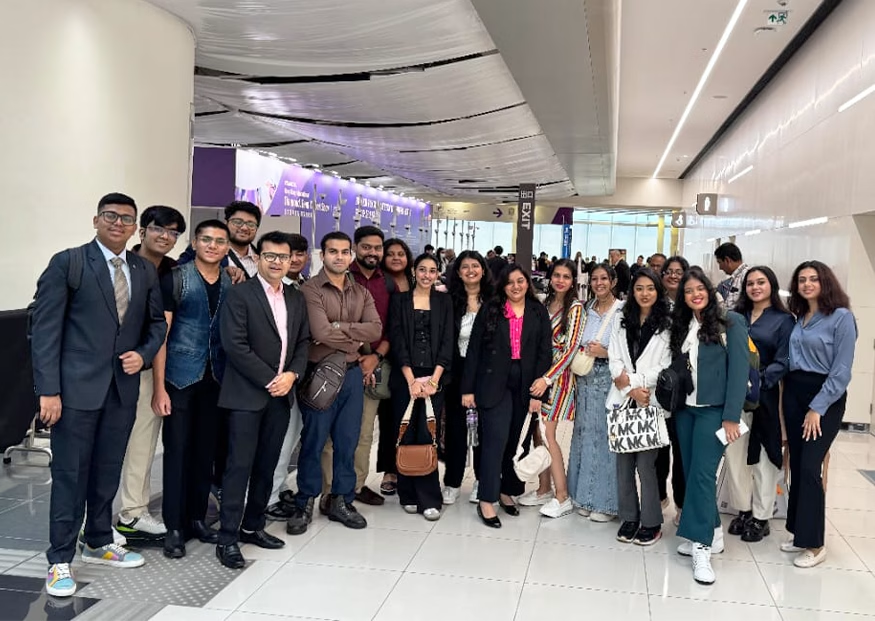
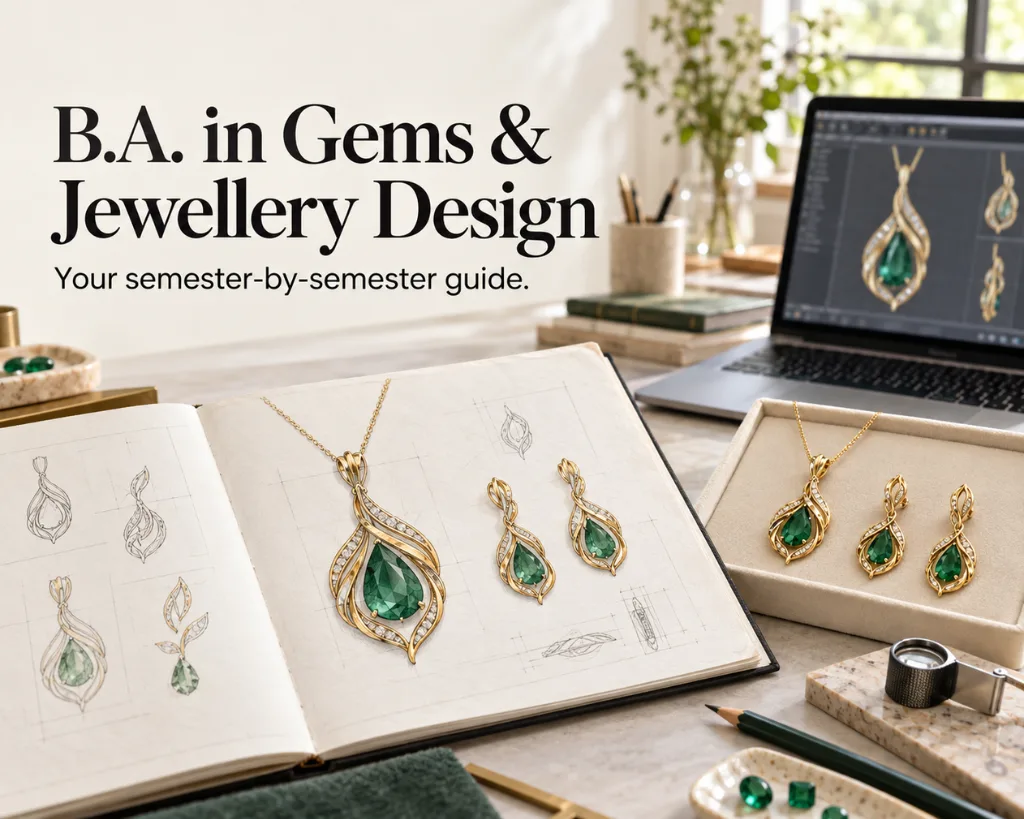
IIGJ students travel to these clusters as part of their coursework. Jaipur students have studied Kundan-Meena at Bikaner, and craft immersion runs through the heritage programming at the campuses. Design history, materials and traditional technique sit inside the B.A. in Gems & Jewellery Design and the B.Des in Jewellery Design rather than being treated as electives.
The hand skills these crafts depend on are taught at the bench through the Diploma in Jewellery Manufacturing and the bench work certificate, and working artisans are supported directly through the skilling programmes run with GJEPC. Which campus you study at shapes which traditions you are closest to, and the Jaipur, Mumbai and Udupi campuses each sit in a different craft geography. The campuses page has the full picture, and admissions can advise on intakes.