
Jewellery is no longer sold only across counters. It is sold through trust, storytelling, store experience, pricing transparency, digital discovery and consumer psychology.
India’s gem and jewellery sector is a USD 100 billion industry, and the business of jewellery is no longer just about gold weight and craftsmanship. It is about how stores are designed, how prices are built, how brands communicate value and how buyers now decide. For anyone entering this space, understanding these forces is the difference between selling a product and building a jewellery business.
Retail: From Family Showrooms to Omnichannel Storefronts
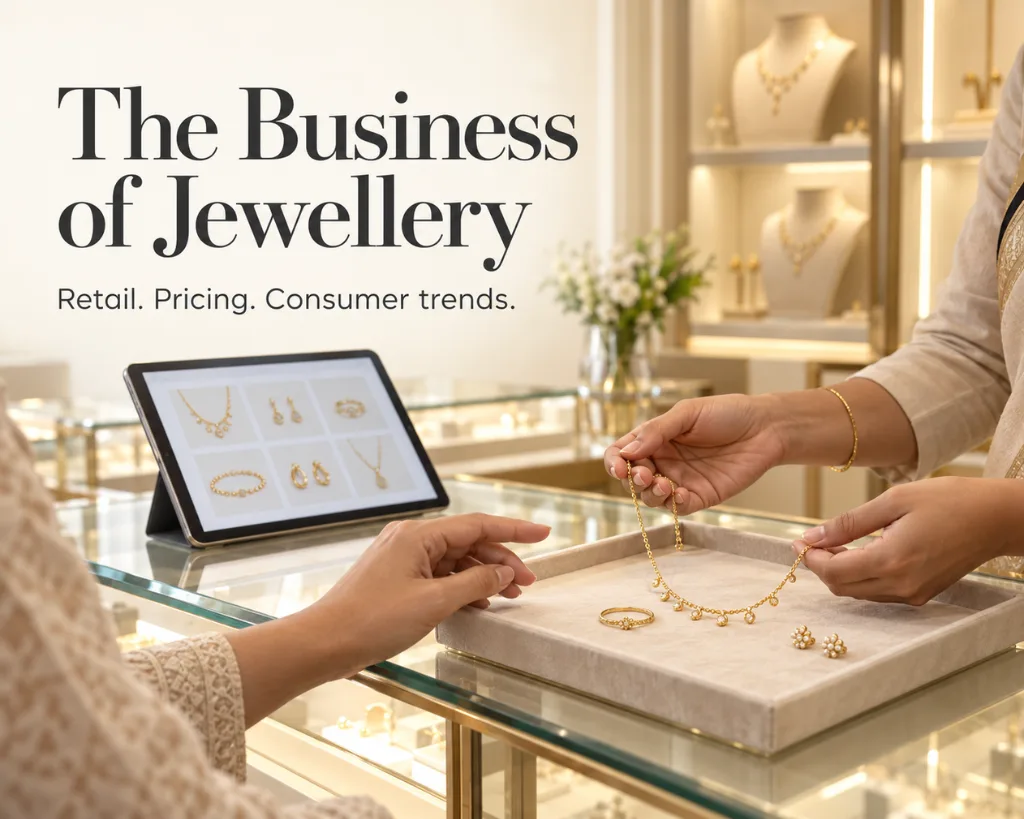
Indian jewellery retail has moved through several stages over the last two decades. The market now includes independent family jewellers, branded national chains and omnichannel players who sell across stores, websites, marketplaces and Instagram.
Each format serves a different buyer. Local jewellers thrive on trust, relationships and customisation. National chains win on certification, design libraries, exchange policies and a consistent retail experience. Digital-first brands capture younger buyers who research online before visiting a store or making a purchase decision.
The modern jewellery retailer can no longer depend on a single channel. One customer may discover a design on Instagram, compare prices online, visit a showroom, speak to family and only then make the final purchase. Retail now depends on how well a brand connects every touchpoint.
Pricing: Where Gold Ends and Brand Begins
Jewellery pricing is one of the most misunderstood parts of the industry. The final tag is not just gold value. It is a combination of several cost and value layers.
- Metal value, based on the day’s gold or platinum rate
- Making charges, which reflect labour, design complexity, craftsmanship and finish
- Stone value, for diamonds and coloured gemstones, priced on quality, size, rarity and the 4Cs (diamond grading is a skill in itself)
- GST and brand premium, layered on top depending on the retailer, positioning and buying experience
The trend today is not only that jewellery has multiple price components. The larger shift is that buyers want more clarity around them. They want to understand what they are paying for, why making charges differ, how stone quality affects price, and why two similar pieces can carry different final tags.
Two retailers can sell the same 22-karat necklace at very different prices because making charges, wastage percentages, craftsmanship and brand positioning all change the calculation. Buyers who understand this stack make more informed decisions. Retailers who explain it clearly build trust faster.
Consumer Trends: The Shift from Heirloom to Everyday
The modern jewellery consumer is not buying the way previous generations did. Pieces once bought mainly for weddings, inheritance or long-term family value are now joined by jewellery meant for everyday wear, self-expression, gifting, workwear and personal milestones.
Five shifts are redrawing the market:
- Lightweight and daily-wear jewellery is gaining importance, as buyers look for pieces that are easier to wear regularly.
- Lab-grown diamonds are gaining share, especially among younger buyers and in tier-1 cities.
- Personalisation and custom design are becoming expected, as consumers look for jewellery that feels individual and meaningful. Technology is making this easier, as explained in how AI and 3D printing are transforming jewellery design.
- Digital discovery drives many store visits, even for high-ticket purchases, because buyers research designs, reviews and brands before entering a showroom.
- Trust and transparency matter more than ever, especially when customers compare prices, certifications, exchange policies and brand reputation.
The result is a market where design sensibility, transparent pricing and a strong online story matter as much as the showroom itself. For jewellery businesses, the sale often begins long before the customer enters the store.
Why This Matters for the Next Generation
The business of jewellery rewards people who can think across craft, commerce and consumer behaviour. Designers need to understand price points. Retail managers need to read trends. Merchandisers need to know both the gold rate and the Instagram feed.
That is exactly the kind of industry-ready training IIGJ delivers across its institutes in Mumbai, Delhi, Jaipur, Varanasi, Udupi, Guwahati and Ratnagiri, through programmes in jewellery management, merchandising, design and luxury brand management. Graduates go on to roles in retail, merchandising, product development and brand management, and placements shows where they have gone.
For the next generation of jewellery professionals, technical skill alone is not enough. The industry needs people who understand the product, the price, the platform and the person buying it. That is what turns jewellery from an object of value into a business of trust, design and experience. To see which programme fits you, speak to admissions about the current intake.