


The diploma vs degree in jewellery design question gets asked as though one answer is better. It isn’t. These are three different products solving three different problems, and the right choice depends almost entirely on where you are standing when you ask: how old you are, how much time you have, whether you already work, and whether you are trying to enter the industry or move within it.
Here is what actually separates them.
What a degree buys you
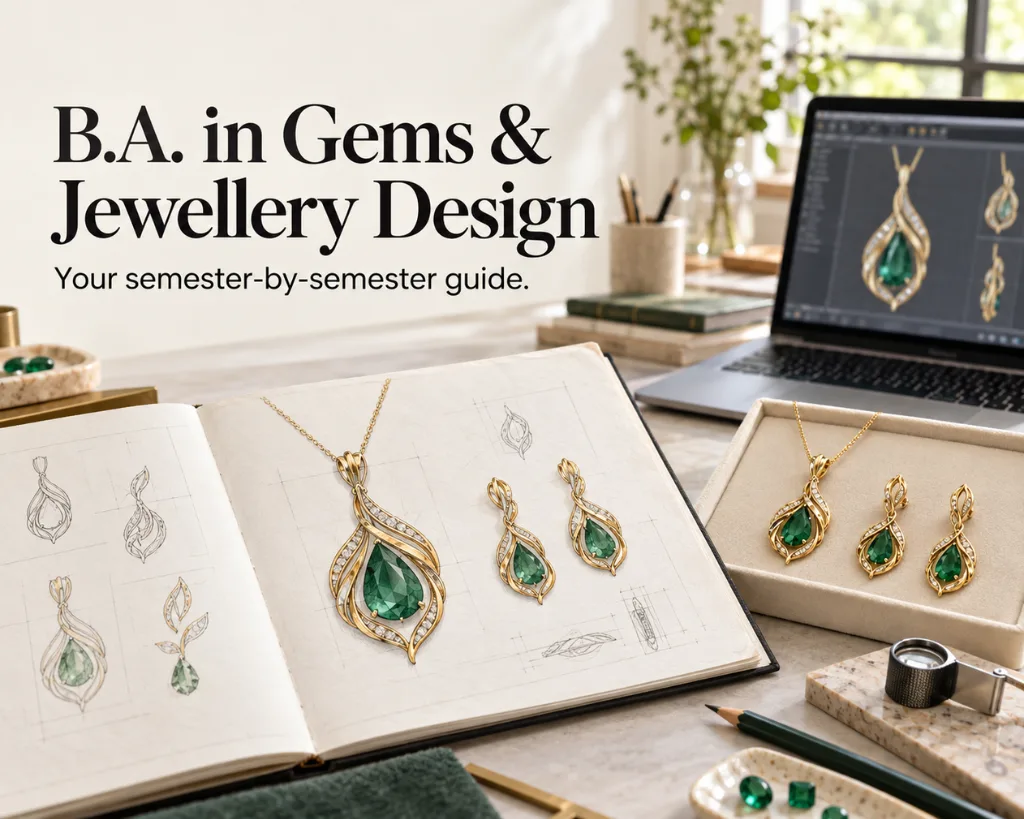
Three to four years, breadth, and a recognised academic qualification. A degree such as the B.A. in Gems & Jewellery Design or the B.Des in Jewellery Design takes you across design, rendering, CAD, manufacturing, gemmology, merchandising and management, with an internship and a graduating collection at the end.
What you are really buying is time to become good. Design ability compounds slowly, and three years of studio work, critique and iteration produces a different practitioner from six months of instruction. The portfolio you leave with reflects that. A degree also keeps doors open to postgraduate study, to teaching, and to roles where a graduate qualification is a formal requirement.
The cost is exactly that: three years, and the opportunity cost of not earning during them. If you are 18 and coming straight from school, that is usually the right trade. At 30, with a job, it often isn’t.
What a diploma buys you
Focus and speed. A diploma commits to one part of the trade and goes deep on it, with much less general education around the edges. The Diploma in Jewellery Design, Diploma in Jewellery Manufacturing, Diploma in Gemmology and Diploma in Computer Aided Design each produce someone employable in a defined role rather than broadly educated across the industry.
Eligibility is 10+2 from any recognised board, the same as the degrees. The B.Des vs diploma jewellery comparison, put plainly: the B.Des makes you a designer with an academic credential, while the diploma makes you a specialist, faster. Employers in manufacturing and CAD hire diploma holders readily and care far more about what you can do than about the certificate’s name.
The limitation is lateral movement. A CAD diploma holder who later wants to run merchandising has a gap to fill. That is solvable, but through further study rather than automatically.
What a certificate buys you
One skill, quickly, at low risk. The jewellery certificate course value is widely underestimated because people compare it to a degree, which is the wrong comparison. A certificate is not a small degree. It is a tool.
It works well in four situations. You want to test whether this industry suits you before committing years. You are joining a family jewellery business and need working knowledge of grading, CAD or merchandising now. You already work in the trade and need one capability added. Or you are a designer in another discipline moving sideways.
The professional certificate courses each isolate a skill: CAD in Rhino, diamond grading, gem identification, bench work, metal setting and merchandising. They also stack usefully. CAD plus diamond grading plus merchandising, taken over two or three years while working, is a genuine professional profile.
The fourth option people forget
If you already hold a degree in something else, whether commerce, engineering, architecture or fashion, the postgraduate route is usually better than starting a second bachelor’s. The Post Graduate Diploma in Jewellery Management is a one-year programme open to graduates from any discipline, covering design, manufacturing, gemmology, CAD, merchandising and management. It is the standard route for career changers and for family-business successors, and its cohorts are deliberately mixed across backgrounds.
A straight way to decide
• If you have just finished school with three or four years available, take the degree.
• If you have just finished school and are certain about one specialism and want to earn sooner, take the diploma in that area.
• If you are already a graduate in another field, take the PG Diploma rather than a second bachelor’s.
• If you are already working, or running a family business, take certificates and stack them over time.
• If you are not sure the industry is for you, take one short certificate and find out.
What matters more than the format
Two things, consistently. First, how much hands-on time the programme includes: workshop hours, live CAD, real stones in your hand. A qualification earned mostly through lectures produces graduates who struggle in their first job, whatever it is called. Second, your portfolio. Employers in this industry look at work before credentials, and the people who do well are the ones who kept making things throughout.
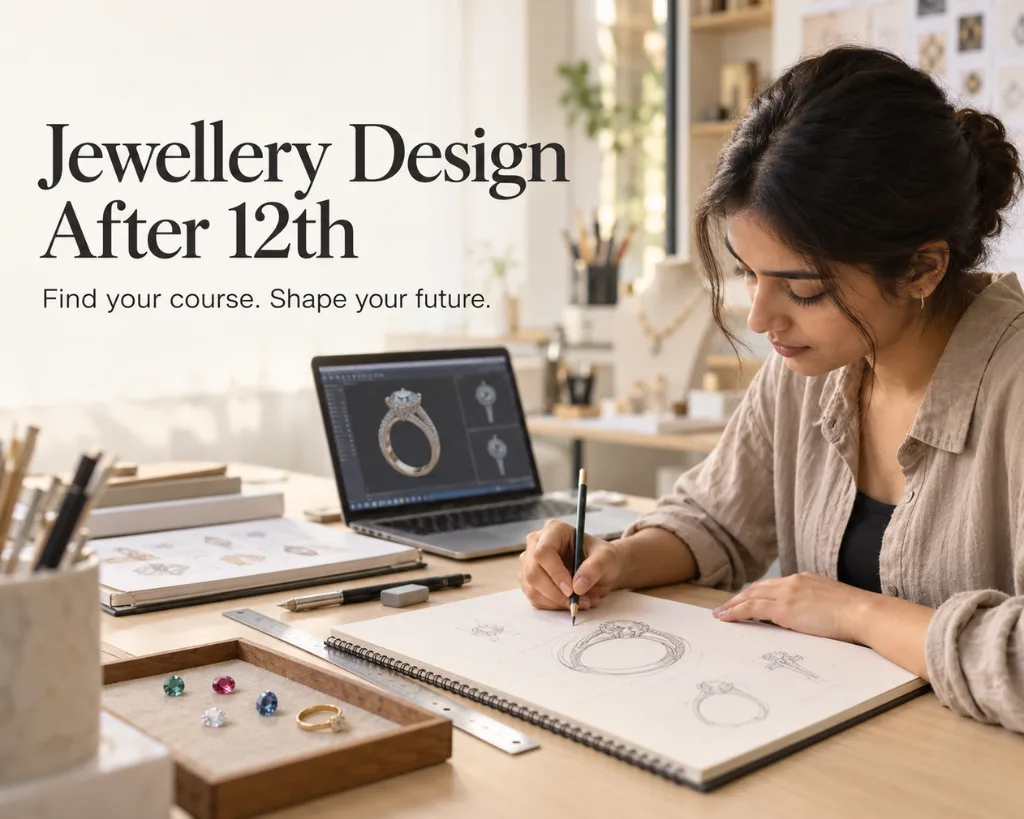
The full range of formats is on the programs page, with the entry-level view in jewellery design courses after 12th and a related perspective in how to choose the right jewellery course. Availability varies by location, so check the campuses page.